
This frog coloring page collection brings simple, joyful art designed for young hands and curious minds. These printable and digital coloring pages feature friendly frogs, tadpoles, lily pads, and wetland scenes that are easy to color and adaptable for different ages. A frog coloring page can be used by toddlers learning to hold crayons, preschoolers exploring colors and shapes, or older kids adding patterns and shading. At home, in the classroom, during homeschool sessions, on road trips, or as quiet-time activities, these pages offer low-prep fun that helps kids focus while letting creativity flow. Beyond entertainment, frog coloring pages support fine motor development, hand-eye coordination, color recognition, patience, and early science vocabulary about frogs and their habitats.
Parents and educators can prompt storytelling, counting, or simple research about amphibians to deepen learning. The designs are intentionally varied so caregivers can pick simpler outlines for toddlers and more detailed scenes for older children who enjoy practicing technique. Warm and approachable, these coloring pages encourage children to experiment with color, build confidence, and connect with nature-themed subjects without pressure. Whether used for a rainy afternoon or a classroom center, a frog coloring page is a gentle, educational tool that invites exploration and fun.


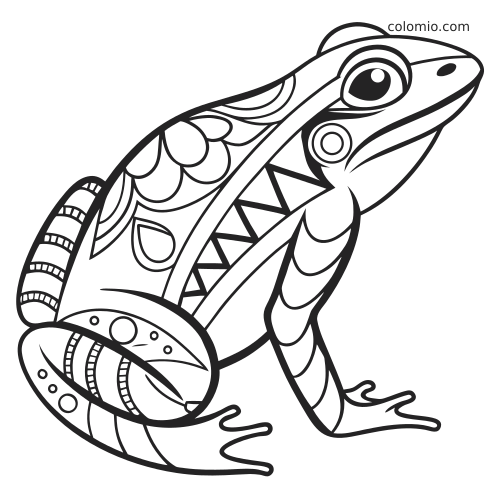
Zentangle frog in side view – colored in by the community
-
by manfred
33 Likes

-
5 Likes

-
4 Likes


Detailed spotted toad in side view – colored in by the community
-
5 Likes
-
1 Likes

Realistic frog with dragonfly in pond – colored in by the community
-
by Bifu
9 Likes

Cute big-eyed poison dart frog – colored in by the community
-
4 Likes

Simple spotted poison dart frog – colored in by the community
-
1 Likes

Simple frog by pond lily pads – colored in by the community
-
by freja
1 Likes

Cute kawaii frog with big eyes – colored in by the community
-
by Katze
5 Likes


Leap Into Color: Simple Tricks to Make Your Frog Look Real
Frogs are fun to color because they have smooth, slightly shiny skin, big eyes, and long back legs made for jumping. While coloring, keep the shapes clean and follow the body curves so your frog looks lively and ready to hop.
Quick Frog Tip: Color in the same direction on the body (for example, from head to back). This helps the frog’s skin look smooth instead of patchy.
What to Watch For While Coloring a Frog
- Skin texture: Frogs usually look best with even coloring and gentle shading, not lots of stripes. Keep the coloring smooth.
- Back vs. belly: Many frogs are darker on top and lighter underneath. This simple change makes the frog look more realistic.
- Leg shapes: The back legs are longer and thicker than the front legs. Carefully follow the outlines so the frog doesn’t look “bent” in the wrong place.
- Toes and toe pads: Some frogs have rounded toe tips. Coloring these neatly helps the feet stand out.
- Spots and markings: If your frog drawing has spots or bands, keep them clear and spaced. Try not to color over them by accident.
- Eyes: Frogs often have a darker pupil and a lighter shine spot. Leaving a tiny white area can make the eye look bright.
Realistic Frog Colors (With Easy Visual Swatches)
These colors match many common frogs. Use the darker greens and browns on the back and the lighter tones on the belly for a natural look.
| Frog Part | Realistic Color | Color Hint |
|---|---|---|
| Back (main body) | Leaf Green | #4CAF50 |
| Back (shadow areas) | Olive Green | #556B2F |
| Spots / markings | Dark Brown | #4E342E |
| Belly (underside) | Pale Yellow | #F6E27F |
| Throat / chest | Cream | #FFF1D6 |
| Eyes (iris area) | Golden Brown | #B8860B |
| Pupil | Black | #000000 |
| Toe pads (if shown) | Soft Gray | #B0B0B0 |
Helpful Hints for a Neat, Realistic Finish
- Start with the lightest colors first (like the belly), then add darker greens on top.
- Press lightly for the first layer and add a second layer only where you want shadows (under the chin, under the belly, and behind the legs).
- Keep the edges clean around the eyes and toes—small details make the frog look extra real.

Cute frog king in side view – colored in by the community
-
by Katze
3 Likes

Cute frog family by the pond – colored in by the community
-
by freja
3 Likes

Close-up frog catching a fly – colored in by the community
-
0 Likes

Simple frog reaching for a fly – colored in by the community
-
0 Likes
Scissors, Glue, Hop! Easy Frog Crafts to Try
Pop-Up Frog Mouth Surprise
✂️ You need: colored frog page, green paper, scissors, glue stick, marker, googly eyes (optional)
- Color and cut out the frog.
- Fold a small strip of green paper like an accordion.
- Glue one end inside the frog’s mouth and the other end to a tiny paper “fly.”
💡 Supports: fine motor skills, creativity, cause-and-effect thinking
Toilet Roll Frog Jumper
✂️ You need: toilet paper roll, green paint or crayons, scissors, glue, scrap paper, marker
- Color the toilet roll green and let it dry.
- Cut two long paper legs and fold zigzags for “springy” knees.
- Glue the legs on and add eyes and a smile with paper or marker.
💡 Supports: hand strength, coordination, imaginative play
Classroom Lily Pad Wall Pond
✂️ You need: colored frog pages, blue paper (or a big sheet), green paper plates or circles, glue, tape, crayons
- Make a “pond” by taping blue paper on a wall or poster board.
- Cut lily pads from green paper plates or paper circles.
- Add each child’s colored frog onto a lily pad and stick them onto the pond.
💡 Supports: teamwork, spatial thinking, pride in finished work


Did You Know? 5 Ribbit-Tastic Facts About Frogs
They Drink Through Their Skin!
Frogs don’t sip water like people do. Many frogs soak up water right through their skin, especially on their belly, like a tiny living sponge. National Geographic Kids
A Frog Starts Life With Gills
Baby frogs (tadpoles) begin life swimming and breathing with gills, kind of like fish. As they grow, they change—legs appear and lungs develop for life on land. Wikipedia
Tree Frogs Have Sticky Toe Pads
Some frogs can climb smooth leaves and even glass because their toes have special sticky pads. In many U.S. states, you can spot tree frogs near ponds, swamps, and wet forests. Smithsonian Magazine
Frogs Sing in National Parks
In places like Everglades National Park in Florida, frogs and toads make loud nighttime “songs.” Scientists and park rangers listen to these calls to learn which amphibians live there. National Park Service
Their Eyes Help Them Swallow
Here’s a weird one: when a frog swallows, its eyes can sink down a little to help push food toward its throat. It’s like built-in “food helpers” behind their eyes! Encyclopedia Britannica


Frog on a lily pad – colored in by the community
-
2 Likes
-
1 Likes
-
1 Likes


Red-eyed treefrog – colored in by the community
-
1 Likes
-
1 Likes
-
0 Likes

Tree frog – colored in by the community
-
1 Likes

Easy frog – colored in by the community
-
2 Likes


Why Kids Love These Frog Coloring Pages
- They build fine motor skills and hand–eye coordination as children trace and color frog shapes and small details.
- Parents and teachers can use them as quick, low-prep activities for art time, science units about amphibians, or quiet centers.
- Coloring frog illustrations introduces vocabulary and observation skills when kids label parts like eyes, legs, or habitat.
- As a screen-free activity, they encourage focused creative play using simple materials like crayons, scissors, and glue.
Creative Ideas & Activities
- Make frog puppets by coloring and cutting out a frog, then gluing it to a popsicle stick for a simple puppet show that practices storytelling and fine motor skills.
- Create a frog lifecycle flipbook by printing stages (egg, tadpole, tadpole with legs, adult) and stapling them so kids can flip through and write one sentence about each stage.
- Play “Lily Pad Math” with numbered frog cutouts and paper plate lily pads to practice counting, addition, or subtraction as kids move frogs between pads.
- Build a habitat diorama using a shoebox, frog cutouts, tissue paper for water, and craft moss or green construction paper for plants to learn about ecosystems.
- Use color-by-number frog pages to teach color words and number recognition, or swap the assigned colors to encourage creative choices and color mixing with crayons or markers.
- Turn a colored frog into a story starter by having each child name their frog and write a short adventure about where it lives and who it meets.
- Create a classroom pond mural by combining multiple frog pages into one big scene and letting each student decorate and add details to build teamwork and composition skills.
- Practice patterns and symmetry by folding a frog template to create mirrored designs or arranging several frogs in repeating color sequences for a tactile math lesson.
Frequently Asked Questions
Are these frog coloring pages free to download and print?
Yes, all coloring pages on this page are free to download and print. You can save files to your computer and print as many copies as you need.
In what file formats are the coloring pages available and how can I print them?
The coloring pages are available in common printable formats such as PDF and JPG for easy downloading. For best printing results choose “fit to page” or actual size in your printer settings and use white copy paper or heavier paper if you plan to use markers.
What ages are these frog coloring pages suitable for?
Pages range from simple outlines for toddlers and preschoolers to more detailed designs for early elementary children. You can select pages by complexity to match the child’s age and fine motor skill level.
Can I use the frog coloring pages in my classroom or kindergarten?
Yes, they can be used for free at school and in kindergarten, and classroom use is allowed. Feel free to print multiple copies for lessons, centers, or art projects.
How can I get the best coloring results with these pages?
Use heavier printer paper or light card stock if you plan to use markers, and smooth white copy paper works well with crayons and colored pencils. Colored pencils and crayons give fine control, while markers give bold color—always test markers on scrap paper first to avoid bleed-through.