

With this step-by-step tutorial you can easily draw a beautiful night sky with moon and stars. With this you have a first basis for a mystical nightscape, which you can expand to your heart’s content.
For this template you need a thin pencil, dividers, a drawing pencil and pencils for coloring.
Welcome to our delightful moon drawing tutorial, designed specifically for children and beginners. In this guide, you will learn how to draw a beautiful crescent moon with ease. Using basic shapes and techniques, you’ll be able to create a stunning night scene in no time.
This tutorial is suitable for young artists aged 5 and up, offering a fun and educational activity to enhance your drawing skills. We’ll guide you through each step using simple instructions and visual aids, ensuring a smooth learning experience. Let’s get started!
What You Will Need
- HB pencil for sketching and guidelines
- 2B pencil for darker outlines
- Eraser for cleaning up guidelines
- Colored pencils in shades of yellow and blue for the moon and sky
- White paper, preferably A4 size, for a clear workspace
- Compass or a circle template for precise circles

Step 1: A circle
Begin by drawing a perfect circle. Use a compass or a circle template to ensure your circle is even and smooth. This will be the base for your moon’s shape, so take your time to get it right. Tip: Use an HB pencil for light lines that are easy to erase later.
Make sure the circle is not too large, as it will serve as a guideline for the crescent moon’s outer edge.

Step 2: Overlapping circles
Next, draw a second circle of the same size, slightly overlapping the first at an angle. This overlap will help create the crescent shape. Keep the lines light, as these are just guides. Tip: Adjust the angle to your liking to give the moon its desired tilt.
The placement of this circle will determine the thickness of your crescent moon.

Step 3: Final contour for the sickle
Now, it’s time to define the crescent moon. Carefully trace along the outer edge of the first circle and the inner edge of the second circle to create the crescent shape. Use a 2B pencil for a darker, more defined look.
Once satisfied with the crescent outline, gently erase the unnecessary parts of the second circle.

Step 4: Clouds
Add some whimsical clouds around your moon to create a dreamy night sky. Use soft, rounded shapes to make the clouds appear fluffy and natural. Tip: Vary the size and shape of the clouds for a more dynamic composition.
Erase any remaining guidelines that might interfere with your cloud shapes.

Step 5: Stars
Scatter a few stars in the sky around your moon and clouds. Draw them in various sizes, but try not to make them too symmetrical. Tip: A random placement of stars will make your scene look more natural and enchanting.
Feel free to add as many or as few stars as you prefer to complete your night sky.

Step 6: Removing the guides and coloring
As the final step, remove all remaining guidelines with an eraser to clean up your drawing. Begin coloring your moon with shades of yellow to give it a warm glow. Use blues and purples for the sky to create a contrast that makes the moon stand out.
Bring your scene to life with vibrant colors and enjoy the beautiful night sky you’ve created!
More Template Ideas


Your Moon Drawing Is Complete!
Congratulations on completing your moon drawing! You’ve created a magical night scene that showcases your artistic skills. We hope you enjoyed this creative journey and learned something new along the way.
If you loved drawing the moon, why not try our other tutorials? Explore our guides on drawing stars, planets, or even a complete galaxy to expand your cosmic artwork collection. Keep practicing and let your imagination soar!
Tips for an Even Better Moon Drawing
The moon looks deceptively simple, but two small choices decide whether your drawing reads as a children’s storybook moon or as a flat round sticker: the shape of the crescent and the shading on the visible surface.
For a crescent, draw two arcs, not two half-circles. The outer arc is a wide curve; the inner arc is a tighter, more pinched curve. The two arcs should meet at sharp points at the top and bottom – never blunt or rounded. The wider the gap between the arcs, the “older” the crescent looks.
For shading, even a flat moon needs subtle depth. Add a soft gray shadow along the inside curve of the crescent (where the dark side begins) and leave the outer rim almost pure white. Three or four small gray circles scattered across the bright side instantly suggest craters without you having to draw realistic ones.
Drawing the Moon Phases
If you can draw one moon, you can draw all eight phases – a great series for a kid’s science project or a calendar drawing:
- New Moon: A simple dark gray circle – almost invisible – with a thin lighter outline.
- Waxing Crescent: Thin sliver of light on the right side, the rest dark.
- First Quarter: Right half lit, left half dark. Sharp vertical line down the middle.
- Waxing Gibbous: About three quarters lit on the right, a curved shadow on the left.
- Full Moon: Complete bright circle with crater detail visible.
- Waning Gibbous: Same as waxing gibbous but mirrored – shadow on the right.
- Last Quarter: Left half lit, right half dark.
- Waning Crescent: Thin sliver of light on the left side.
Tip for kids: the lit side always points toward the sun. In the northern hemisphere, the moon “grows” from the right and “shrinks” from the left.
Cute Moon Character Variations
A moon with a face is one of the most beloved children’s drawing motifs. A few options to try:
- Sleeping moon: Crescent shape with a closed eye drawn as a curved line and a small “Z Z Z” floating nearby. Add a tiny nightcap with a pompom on the upper tip.
- Smiling moon: Crescent with a small upward-curving smile and a single round eye with a long lash. Sweet, gentle, a classic for nursery decoration.
- Winking moon: One open eye, one closed (just a curved line), with a small smirk. Adds personality.
- Surprised moon: Wide round eyes and a small “O” mouth. Great for cards and comics.
- Moon with stars as friends: The moon at center, surrounded by 5–8 small stars with their own tiny smiling faces.
Night Sky Backgrounds
Almost any background turns a moon into a finished picture. The simplest options:
- Star field: Sprinkle 15–25 small dots and stars in three sizes across a deep blue or black sky. Vary placement – never in a grid.
- Cloud frame: A few soft, curved clouds drifting across the moon. Some clouds can pass in front of the moon for depth.
- Owl on a branch: A small bare tree branch with a sleepy owl silhouetted against the moon. Magical and instantly atmospheric.
- City skyline: A dark horizontal silhouette of buildings at the bottom, the moon rising above. A few yellow-lit windows complete the scene.
- Forest silhouette: Pointed pine-tree shapes in dark blue or black across the bottom. The moon hangs just above the treeline.
Color Palettes for the Night Sky
The classic blue-and-yellow combination works, but try one of these alternatives for a more atmospheric result:
- Storybook night: Deep navy blue sky, pale yellow moon, soft white stars.
- Moody twilight: Gradient from dark purple (top) to pink-orange (horizon), with a pale silver moon.
- Halloween night: Black sky, orange moon, a single black bat silhouetted against it.
- Winter night: Cool teal-blue sky, almost-white moon, a few snowflakes in the air.
Common Mistakes to Avoid
1. The crescent looks like a banana. A real crescent has sharp, pinched points at top and bottom, not rounded ends.
2. Both arcs of the crescent have the same curve. The outer arc must be wider; the inner arc must be tighter. Equal arcs flatten the moon.
3. The face is too big for the crescent. If you’re drawing a smiling moon, keep the face small and tucked into the lower half of the crescent. A face filling the whole crescent looks crammed.
4. Stars in straight lines or perfect grids. Real night skies are messy. Scatter stars unevenly, with some clustered and some isolated.
5. Pure white moon on dark sky with no shading. Even a glowing moon needs at least one soft gray accent or a few craters – otherwise it reads as a flat circle, not a sphere.
Frequently Asked Questions About Drawing a Moon
What tools do I need to draw a moon?
You will need pencils (HB and 2B), an eraser, colored pencils, white paper, and a compass or circle template.
How do I make the crescent moon look realistic?
Focus on smooth, even lines and use shading techniques with your colored pencils to add depth and dimension.
Can I use a different color for the moon?
Yes, feel free to experiment with colors, but traditionally, shades of yellow work well for a moon drawing.
How do I draw stars that look natural?
Vary the size and placement of stars, making sure they are not too evenly distributed to ensure a natural look.
What should I do if I make a mistake?
Mistakes can be easily corrected with an eraser. Light pencil lines make it easier to correct any errors.
Take a picture and send it to [email protected] – we publish it on www.colomio.com!
All tutorials and images are copyrighted by happycolorz GmbH. Interested in using it? Please send a mail to [email protected].
More ideas for drawing
-

Airplane drawing -

Plane drawing easy -

Apple drawing -

Bicycle drawing -

Ship drawing -

Car drawing -

Car drawing easy -

Cat drawing -

Cow drawing -

Dinosaur drawing -

Dog drawing -

Puppy drawing -

Dragon drawing -

Digger drawing -

Fairy drawing -

Giraffe drawing -

Lion drawing -

Mermaid drawing -

Moon drawing -

Motorcycle drawing -

Penguin drawing -

Pig zeichnen (einfach) -

Princess drawing -

Reindeer drawing -

Rooster drawing -

Santa Claus drawing -

Shark drawing -

Sheep drawing -

Strawberry drawing -

Sunflower drawing -

Tiger drawing -

Tractor drawing -

Train drawing -

Tree drawing -

Tree drawing easy -

Tulip drawing -

Turtle drawing -

Unicorn drawing -

Unicorn drawing easy -

Witch drawing
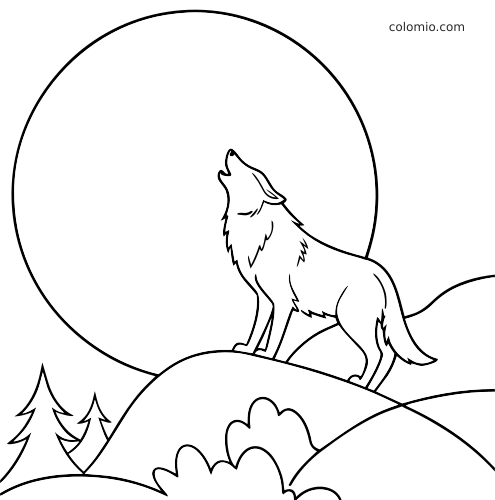
Print our free printable moon coloring pages — ready-to-print line art, no signup.