Exotic afternoons with a coconut coloring picture
 Author Mathias
 This coconut coloring page is a simple, joyful way to bring a little tropical fun to young artists. These printable coconut images range from bold, chunky outlines perfect for toddlers to more detailed coconut drawings that older kids will enjoy. Each coloring page shows coconuts in different scenes—whole fruit, halved with the white flesh exposed, and playful beach settings—so children can explore shapes, patterns, and imaginative stories as they color. The pages are designed to be easy to use: print at home, tuck into a folder for travel, or hand out in the classroom.
These coconut coloring pages are suitable for toddlers, preschoolers, and older kids who want a relaxed creative activity. Use them at home for quiet time, in a homeschool lesson about plants, or on long car rides to keep little hands busy. Beyond fun, coloring supports fine motor development, color recognition, hand-eye coordination, and early writing skills, while coconut-themed pictures introduce simple vocabulary and cultural curiosity. Whether a child prefers bright, wild palettes or careful shading, these pages invite experimentation and conversation, making them a gentle, educational activity that families and teachers can feel good about sharing.

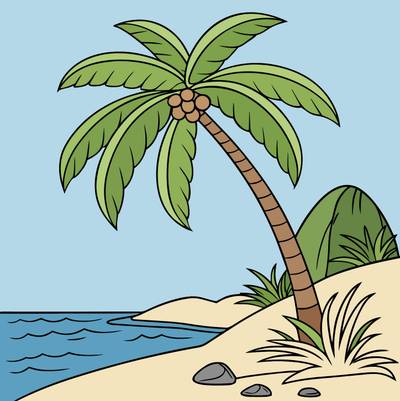
Simple coconut palm by island shore – colored in by the community
-
by henrik
 7 Likes

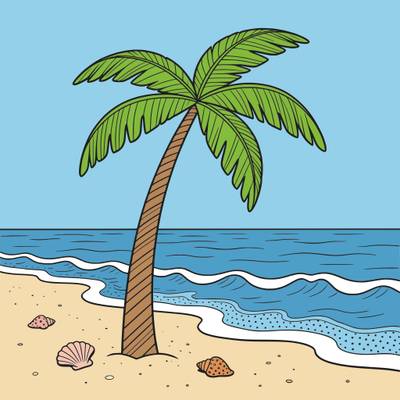
Detailed coconut palm on the beach – colored in by the community
-
by Marlene
 4 Likes

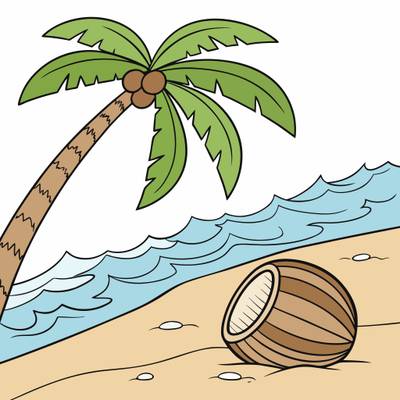
Simple coconut by waves and palm tree – colored in by the community
-
by Ingrid
 3 Likes

Detailed coconut beside ocean waves – colored in by the community
-
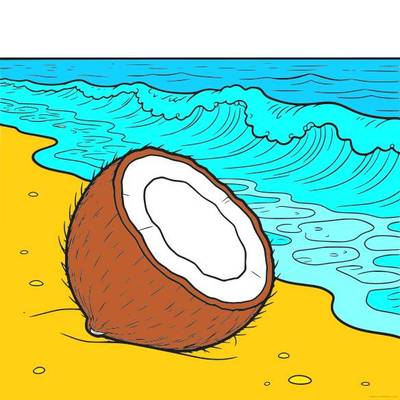 6 Likes

Palm tree with coconuts and sun – colored in by the community
-
by zofia
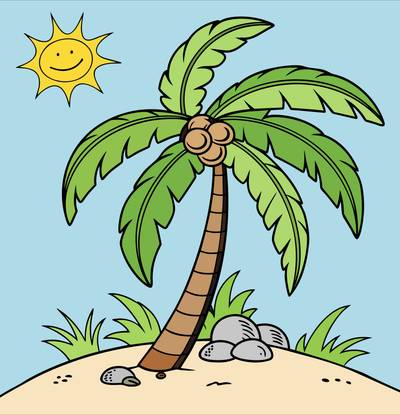 10 Likes

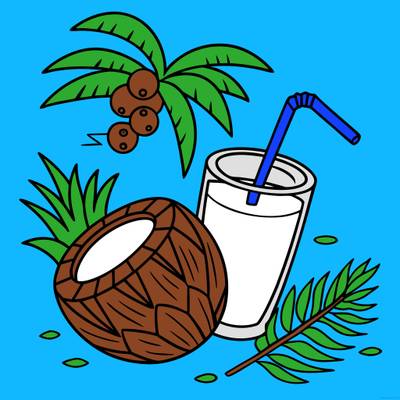
Coconut drink and palm tree – colored in by the community
-
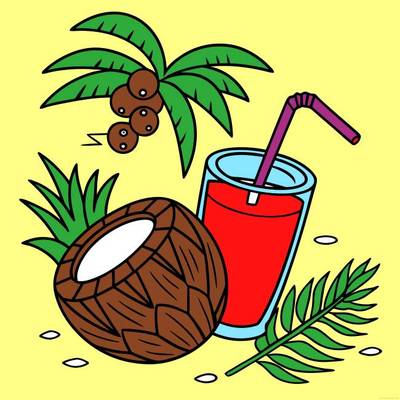 7 Likes
-
by lily
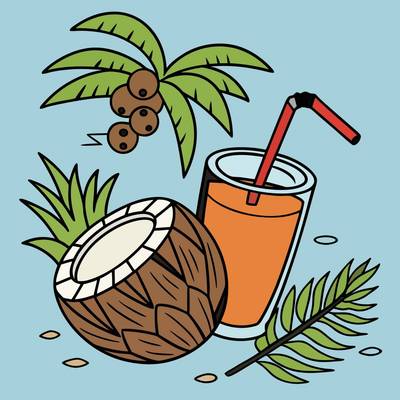 1 Likes
-
 0 Likes

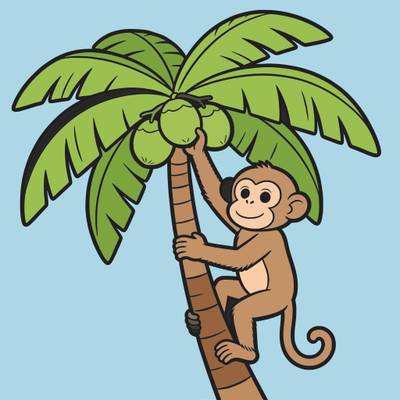
Cute monkey climbing a coconut tree – colored in by the community
-
by greta
 6 Likes

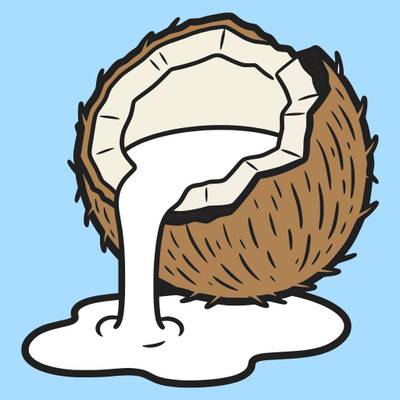
Cracked coconut with pouring milk – colored in by the community
-
by chloe
 3 Likes
-
 1 Likes
-
 0 Likes

Cheerful coconut drink design – colored in by the community
-
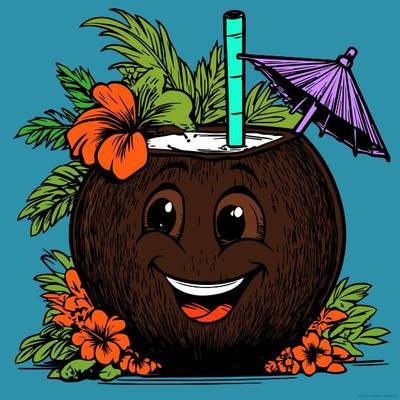 2 Likes


🎨 New coloring pages by email
Regularly get new free coloring pages straight to your inbox – no spam, unsubscribe anytime.
You’ll first get a confirmation email (double opt-in). Unsubscribe anytime with one click. Privacy Policy
Bring a Coconut to Life: Simple Coloring Tips for a Tropical Treat
A coconut may look simple at first, but it becomes much more exciting when children notice its rough shell texture, its round shape, and the little “face” marks many coconuts have. With a few careful choices, the coloring page can look wonderfully real.
What to Notice While Coloring a Coconut
- Texture lines: Many coconut drawings show short strokes or tiny bumps. Color lightly first so the texture stays visible.
- Round shape: Keep the edges a bit darker and the middle slightly lighter to help it look curved, not flat.
- The “three eye” spots: If your coconut has three small circles on one end, make them darker than the shell so they stand out.
- Shell fibers: Some pictures include hair-like fibers. Use thin strokes in the same direction to make them look natural.
- Cracks or cut edges (if shown): Color the crack lines carefully so they stay clear and don’t disappear under heavy coloring.
Helpful hint: Press gently for the first layer. A second light layer can deepen the color while still keeping the coconut’s bumpy details easy to see.
Realistic Coconut Colors (With Easy Color Hints)
| Part of the Coconut | Color Name | Color Hint |
|---|---|---|
| Outer shell (main) | Medium Brown | |
| Outer shell (shadows) | Dark Brown | |
| Outer shell (highlights) | Light Tan | |
| Fibers (if shown) | Warm Beige | |
| “Eye” spots | Very Dark Brown | |
| Inside flesh (if shown) | Off-White | |
| Inner shell edge (if shown) | Grayish Brown | |
| Coconut water (if shown) | Pale Blue-Gray |
Small Steps That Make the Coconut Look Real
- Color the shell first with a light layer of medium brown.
- Add dark brown along one side and under any overlaps to create shadow.
- Blend in a little tan in the center area to create a gentle highlight.
- Finish the “eye” spots last so they stay crisp and easy to see.
Scissors, Glue, Go! Coconut Crafts for Little Hands
Make a Fluffy Coconut Shell!
✂️ You need: coconut coloring page, cotton balls or tissue bits, glue stick, brown crayon or marker, child-safe scissors
- Color the coconut brown and add a few dark lines.
- Pull cotton balls into small fluffy pieces.
- Glue the fluffy pieces onto the coconut for texture.
💡 Supports: fine motor skills, sensory play, creativity
Coconut Cup Puppet Peekaboo
✂️ You need: coconut coloring page, paper cup, glue or tape, child-safe scissors, yarn or paper strips, marker
- Color and cut out the coconut.
- Glue the coconut onto the front of a paper cup.
- Tape yarn or paper strips inside the cup and wiggle them like “coconut hair.”
💡 Supports: imagination, hand control, storytelling
Classroom Coconut Tree Wall Mural
✂️ You need: several coconut coloring pages, large paper or poster board, green paper, brown paper, glue, child-safe scissors, crayons or markers
- Color and cut out lots of coconuts.
- Cut a big tree trunk and palm leaves from paper.
- Glue the trunk, leaves, and coconuts onto the poster to make one giant tree.
💡 Supports: teamwork, planning, scissor skills
Did You Know? 5 Totally Cool Facts About Coconuts
Not a Nut at All!
A coconut is actually a fruit called a “drupe,” kind of like a peach with a super tough coat. That’s why it has layers: a smooth outside, a fibery middle, and a hard shell. Encyclopedia Britannica
Built-In Floating Boat
Coconuts can float for a long time, which helps them travel across oceans and start new palm trees on faraway beaches. Their fibery husk works like a life jacket! National Geographic
Hawaii Grows Coconuts
In the United States, coconuts are grown in warm places—especially Hawaii, where coconut palms are part of the island scenery and local farms. Wikipedia
One Tree, Many Uses
People use lots of parts of the coconut palm: the fruit for food and drinks, the leaves for weaving, and the fibery husk (called coir) for ropes, mats, and garden stuff. It’s like a “many-tools” tree! National Geographic
Those “Eyes” Have a Job
On one end of a coconut are three little spots that look like a face. One of those “eyes” is softer, and that’s where the sprout can push out when a new palm tree starts growing. Kiddle
Why Kids Love These Coconut Coloring Pages
- Coloring coconut shapes and textures helps children develop fine motor control and hand-eye coordination while practicing staying inside the lines.
- Teachers and parents can quickly print multiple coconut pages for centers, homework, or themed lessons, saving prep time and resources.
- These coconut coloring pages offer a quiet, screen-free activity that encourages focus, creativity, and conversation during free play or transition times.
- Coloring coconut scenes supports color recognition, pattern practice, and storytelling prompts that build vocabulary and imagination.
Creative Ideas & Activities
- Make a coconut collage by coloring different pages, cutting out the best parts, and arranging them on a poster board to create a tropical scene; add tissue paper for palm leaves and sand with brown paper or crayons.
- Create a counting game by numbering coconuts on the pages and having children paste the correct number of stickers or pom-poms on each coconut to practice numeracy.
- Use coconut pages as story starters: have each child color a page, then take turns adding one sentence to a group story inspired by their picture, building language and sequencing skills.
- Turn coconut drawings into greeting cards by folding a sheet, pasting the colored coconut on the front, and writing a short message inside for holidays or thank-you notes.
- Make a matching memory game by printing two copies of simple coconut images, coloring each pair differently, cutting them into cards, and playing classic memory matching.
- Set up a sensory art station where kids glue textured materials—sand, yarn, or fabric scraps—onto colored coconut pages to explore touch while creating mixed-media art.
- Create a classroom mural by assigning each student a coconut page to color and contribute to a large beach backdrop, then display the finished mural on a bulletin board.
- Use coconut images for a science mini-lesson by coloring different stages of a coconut’s life cycle, labeling parts like the shell and sprout, and discussing plant growth in simple terms.
Frequently Asked Questions
Are these coloring pages free to download and print?
Yes, all coloring pages on this page are free to download and print for personal and classroom use. You can print as many copies as you need for home activities, school projects, or kindergarten centers.
What file formats are the coloring pages available in and how do I print them?
The pages are typically provided as PDF files for easy, consistent printing and as JPG images for single-file use or editing. Download the file, open it in a PDF viewer or image program, set your printer to 100% scale, and print on standard letter paper or heavier cardstock if desired.
What ages are the coconut coloring pages suitable for?
These coconut pages are suitable for preschoolers through early elementary students, with simpler designs for toddlers and more detailed scenes for older children. Teachers can choose pages by complexity to match fine motor and attention levels in kindergarten and early grades.
Can I use these coloring pages in my classroom or kindergarten?
Yes, you may use the coconut coloring pages freely in classrooms, kindergarten centers, and school activities. They are classroom-friendly and work well for group lessons, art stations, and take-home assignments.
How can I get the best coloring results with crayons or markers?
For crayons and colored pencils, standard printer paper or slightly heavier paper works well and allows for layering and blending; use markers on thicker paper or cardstock to prevent bleed-through. Place a scrap sheet under the page when using markers, test colors first, and encourage light layers to build up richer tones without tearing the paper.