

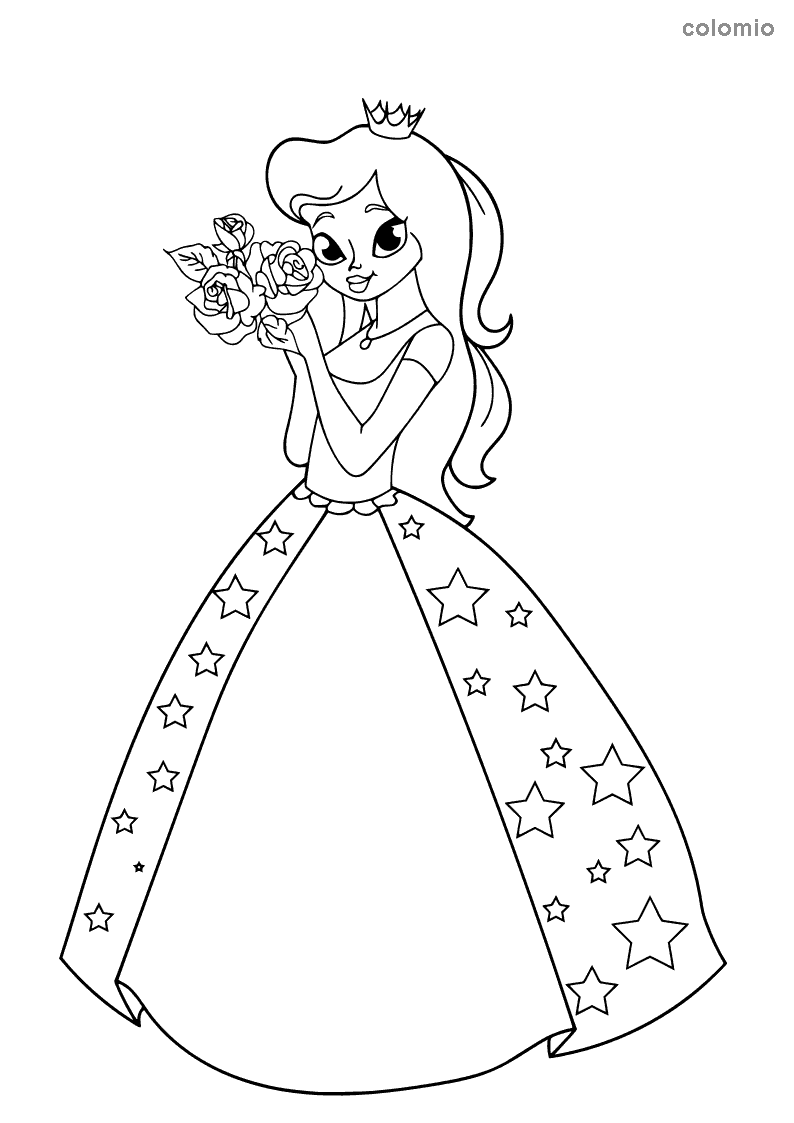
With the help of this tutorial you can draw a beautiful princess step by step.
You will need a hard, erasable pencil (HB or H2), an eraser, an eraser-proof drawing pencil and good colored pencils.
Welcome to our delightful tutorial on how to draw a princess in just 8 easy steps! This guide is perfect for children and beginners who are eager to explore the enchanting world of art. Whether you’re a young artist or someone picking up a pencil for the first time, this step-by-step process will guide you through creating a beautiful princess drawing with ease.
In this tutorial, you’ll learn essential drawing techniques, starting with basic shapes and lines to form the structure before adding intricate details. We utilize a simple approach, making it accessible for kids aged 5 and up, as well as beginners who want to improve their drawing skills. Let’s get started on this magical journey!
What You Will Need
- A sheet of drawing paper (A4 size recommended)
- HB pencil for sketching
- 2B pencil for final contours
- Colored pencils (red, yellow, blue, and any other colors you prefer)
- An eraser for corrections
- A fine fiber pen for outlining

Step 1: Head and torso
Let’s start with the basics: the princess’s head and torso. Begin by drawing a circle at the top of your paper to represent the head. Directly below, draw a triangle with the tip pointing downward. This will form the foundation of the torso.
Tip: Use light pencil strokes so you can easily make adjustments later.

Step 2: The dress
Next, it’s time to create the elegant dress. At the base of the triangle, draw a bell-shaped skirt. Ensure the shape is symmetrical on both sides for a balanced look. Don’t worry if it’s not perfect at first; you can always refine it with your eraser.
Tip: Use quick, gentle strokes to achieve a smooth curve.

Step 3: Arms and hands
Now, let’s add the arms and hands. Mark the shoulders, elbows, and wrists with small circles to guide you. Connect these circles with lines to sketch out the arms. Indicate the hands by drawing small ovals or curved lines at the wrist circles.
Tip: Keep the arm lines light and fluid, as you will finalize them in the next steps.

Step 4: First final contours
It’s time to refine your sketch with final contours. Take your 2B pencil or a fine fiber pen and carefully outline the head, shaping the neck and shoulders. Smoothly connect the shoulder, elbow, and wrist marks to give the arms their final form. You can also start sketching the hairline.
Tip: Use long, sweeping lines to create a natural flow.

Step 5: Finishing the silhouette
Now focus on shaping the dress. With the pencil, contour the dress from the armpits down to the waist and then to the bell-shaped skirt. Add a wavy line to the hem for a lively effect.
Tip: Imagine the dress as a flowing fabric to capture its movement and grace.

Step 6: Important details for face, neckline, crown and dress
Let’s add some magical details! Draw the princess’s facial features, such as eyes, nose, and mouth. Next, sketch a refined neckline and a crown on her head. Enhance the dress with decorative accents like patterns or jewels.
Tip: Be creative with the crown design, as it’s the princess’s crowning glory!

Step 7: Remove all guides
Before we add color, ensure all the guides are removed. Boldly draw over the lines you want to keep with your pencil. Once satisfied, gently erase any remaining pencil marks. Now your princess is ready for a splash of color.
Tip: Double-check that all pencil marks are erased for a clean finish.

Step 8: Coloring
The final step is to bring your princess to life with color. Use your colored pencils to fill in the drawing. The template suggests a blond princess in a red dress, but feel free to choose any colors you like.
Tip: Blend colors for a softer transition between shades.
More Template Ideas


Your Princess Drawing Is Complete!
Congratulations on completing your beautiful princess drawing! You’ve learned how to construct a character using basic shapes and how to add details to bring your artwork to life. We hope you enjoyed this creative journey!
If you’re eager to learn more, explore our other tutorials, like ‘How to Draw a Fairy’ or ‘How to Sketch a Castle’. Keep practicing and let your imagination soar!
Tips for an Even Better Princess Drawing
Three details set apart a princess drawing from any other female character: the large expressive eyes, the flowing dress with visible volume, and the delicate crown or tiara. Take a little extra time on each of these and the drawing instantly looks finished.
The face is built on a soft heart-shaped outline – wider at the cheekbones, gently tapered to a small rounded chin. The eyes should be large, almond-shaped, and placed in the lower half of the head (this is what gives the princess her youthful, friendly look). Each eye gets long curved lashes on top and small lashes underneath, plus a clear white highlight inside the iris.
The hair should never look like a solid block. Always show direction with a few longer flowing strands at the front, smaller wisps near the face, and a sense of weight at the bottom. Whether it’s a braid, a bun, or loose curls, the hair should feel like it has movement.
The dress is the costume star. Real fabric folds – never let the dress hang as a flat triangle. Add at least 4–5 vertical fold lines down the skirt, with the folds gathering more tightly near the waist and spreading out toward the hem. A puffy or bell-shaped skirt feels more “princess” than a fitted dress.
The crown sits on the upper part of the head, slightly tilted forward. It should be smaller than most beginners draw – a tiara or thin diadem usually looks more elegant than a heavy gold crown.
Princess Style Variations
The same princess body plan can become very different characters with small changes:
- Classic Disney-style princess: Large eyes with sparkling highlights, flowing pastel gown, long hair, small tiara. Ageless storybook look.
- Medieval / fairy-tale princess: Long-sleeved velvet gown with embroidered details, hair in a long single braid woven with flowers, simple gold circlet on the head.
- Ice / snow princess: Pale silver-blue gown with crystal patterns, white-blonde hair, snowflake-shaped crown, soft icy glow around the figure.
- Forest / fairy princess: Green and brown layered dress with leaf details, flower crown made of small blossoms, butterfly companions.
- Sea / mermaid princess: Hair flowing as if underwater, dress made of seashell or scale patterns, pearl tiara, fish or seahorse nearby.
- Modern princess: Stylish slim gown, contemporary updo hairstyle, minimalist tiara. More fashion-forward than fantasy.
- Warrior princess: Practical gown over leather armor, sword or bow at the side, determined expression. The strong, capable variation.
- Toddler princess: Smaller proportions, oversized eyes, ruffled puffy dress, oversized crown that almost slips off. Adorable for nursery art.
Crown & Tiara Designs
The crown completes the princess. A few options to try:
- Classic tiara: Curved metal band rising in the center, single round gem at the top, smaller gems on each side.
- Heart crown: Tiara with a small heart shape in the center. Sweet and storybook-cute.
- Tall pointed crown: Five tall gold spikes with gems at each tip. The classic medieval royal look.
- Floral crown: A garland of small flowers (roses, daisies, or wildflowers) instead of metal. Perfect for forest princesses.
- Crystal tiara: Made of jagged crystal points or snowflakes for an icy princess.
- Pearl headband: Simple band with small pearls along the top. Understated and elegant.
Princess Scenes & Settings
Place your princess in a setting that tells a story:
- Castle balcony: Stone balcony with carved railings, the princess looking out at distant mountains and a sunset sky.
- Royal garden: Flower beds, a small fountain, butterflies, and a winding path. The princess holds a single rose.
- Fairy-tale forest: Tall trees with dappled light, woodland creatures (rabbits, deer, birds) gathered around the princess.
- Throne room: Tall golden throne, red velvet carpet, banners on the walls. Formal and grand.
- Ballroom: Crystal chandelier, marble floor reflecting the dress, candlelight glow. The princess mid-dance with a partner.
- Tower window: The princess leaning out a small castle window, long hair cascading down, distant landscape behind her.
- Magical pond: Princess kneeling beside still water with glowing fish, lily pads, and a swan. Quiet and dreamy.
Color Palettes for Different Princesses
- Classic pink princess: Soft rose-pink gown, long blonde hair with golden highlights, gold tiara, blue eyes.
- Royal blue elegance: Deep sapphire-blue gown with silver embroidery, dark hair, silver crown with diamonds.
- Forest green: Emerald-green dress, auburn hair with flower accents, gold-leaf circlet, hazel eyes.
- Ice princess: Pale icy-blue gown, white-blonde hair, silver-white tiara, light blue eyes.
- Sunset princess: Coral-pink and gold gradient gown, dark wavy hair, copper crown, warm brown eyes.
- Storybook pastel: Lavender dress, soft mint accents, baby-blue ribbons, cream-blonde hair. Pure children’s book magic.
Common Mistakes to Avoid
1. The eyes are too small. Princess characters always have large, expressive eyes – bigger than realistic proportions would suggest. Small eyes make the face look harsh.
2. The hair is a solid blob. Without flowing strands and visible direction, the hair looks like a wig glued onto the head. Always show movement and individual locks.
3. The dress hangs flat. Without folds, the dress reads as a triangle of fabric. Add at least 4–5 fold lines from waist to hem for instant volume.
4. The crown is too big. An oversized crown that covers half the forehead looks more like a costume than royalty. Keep it delicate and proportional.
5. Forgetting the eyelashes. Long upper lashes are a princess signature – they soften the face and add femininity. Without them, the character looks unfinished.
6. The neck is too thick. A graceful princess has a slightly long, slim neck. Drawing it as wide as the head makes the figure look stocky.
7. No highlights in the eyes. A small white reflection in each eye is what brings the princess to life. Without it, the eyes look dead.
Frequently Asked Questions About Drawing a Princess
What type of paper should I use?
We recommend using A4 size drawing paper as it’s easy to handle and provides ample space for your artwork.
Can I use markers instead of colored pencils?
Yes, markers can be used, but they may bleed through thin paper, so ensure your paper is thick enough or use a backing sheet.
What if I make a mistake while drawing?
Don’t worry! Use an eraser to gently remove unwanted lines and redraw them. It’s all part of the learning process.
How can I make my princess drawing more unique?
Personalize your princess by changing her hairstyle, dress pattern, or colors. Let your creativity guide you!
Do I need to follow the template colors exactly?
No, feel free to experiment with different colors to give your princess a unique look that reflects your personal style.
Take a picture and send it to [email protected] – we publish it on www.colomio.com!
All tutorials and images are copyrighted by happycolorz GmbH. Interested in using it? Please send a mail to [email protected].
More ideas for drawing
-

Airplane drawing -

Plane drawing easy -

Apple drawing -

Bicycle drawing -

Ship drawing -

Car drawing -

Car drawing easy -

Cat drawing -

Cow drawing -

Dinosaur drawing -

Dog drawing -

Puppy drawing -

Dragon drawing -

Digger drawing -

Fairy drawing -

Giraffe drawing -

Lion drawing -

Mermaid drawing -

Moon drawing -

Motorcycle drawing -

Penguin drawing -

Pig zeichnen (einfach) -

Princess drawing -

Reindeer drawing -

Rooster drawing -

Santa Claus drawing -

Shark drawing -

Sheep drawing -

Strawberry drawing -

Sunflower drawing -

Tiger drawing -

Tractor drawing -

Train drawing -

Tree drawing -

Tree drawing easy -

Tulip drawing -

Turtle drawing -

Unicorn drawing -

Unicorn drawing easy -

Witch drawing
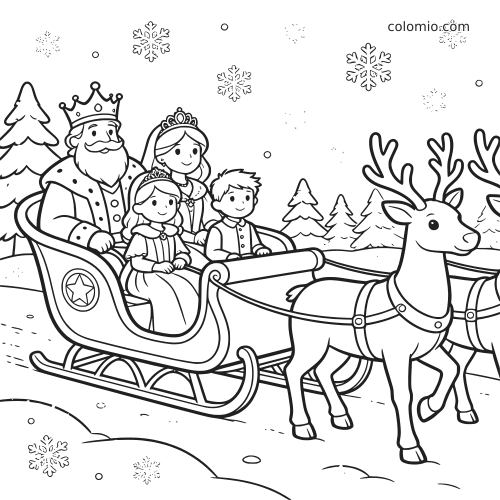
Print our free printable princess coloring pages — ready-to-print line art, no signup.