

Step by step to the penguin! Use the following template to draw the inhabitant of Antarctica in great detail. Our penguin can be perfectly used to illustrate texts, for comics or other picture stories.
⚠️ You’ll need a pencil for the guide lines, a black and gray drawing pencil, and two yellow drawing pencils in different shades. Here we go:

Step 1: Head and torso
Draw a large oval with the pencil (like an egg standing upright) and a small circle above it. Leave a small space between the two.

Step 2: Wings and legs
Connect the circle and oval together and indicate the penguin’s legs at the end of the large oval. Also draw the wings, which look like arms hanging down and spread from the body.

Step 3: Beak and feet
Draw the underside of the wings and the beak on the penguin’s head. Also indicate the legs and feet.

Step 4: Final contours
Now use the drawing pen to trace all the black lines shown in the template. The penguin now gets its eye and the indicated drawing on the head.

Step 5: Removing the guides
Remove the guides previously inserted with the pencil.

Step 6: Coloring
Color the penguin with yellow, dark gray and white as shown in the instructions. Done!
More Template Ideas


Your Penguin Drawing Is Complete!
Well done – your little penguin is ready to waddle off the page! With a few simple ovals, some guide lines and a bit of patience you’ve created a charming bird from scratch. We hope you enjoyed following the steps and feel inspired to keep drawing.
If you’d like to try something similar next, take a look at our turtle drawing, shark drawing or reindeer drawing tutorials.
Tips for an Even Better Penguin Drawing
The shape of the body is the most important part. Keep the belly nice and round, and let the head sit slightly forward rather than centered – that small tilt instantly makes the penguin look alive and curious.
For coloring, work from light to dark: start with a thin layer of gray or pale blue on the back, then add black on top. Leave a clean white belly and pop in an orange beak and feet. A tiny white highlight in each eye gives your penguin its friendly expression.
Penguin Species: Beyond the Standard Black-and-White
The simple penguin shape adapts beautifully to many real species:
- Emperor penguin: The largest species – tall, elegant, with vivid yellow-orange ear patches that fade into a yellow chest. The classic Antarctic icon.
- King penguin: Similar to the Emperor but smaller, with brighter, more clearly defined orange ear patches and a slimmer build.
- Adélie penguin: Small, classic black-and-white tuxedo look, with a distinctive white ring around each black eye. The cartoon-friendliest real penguin.
- Gentoo penguin: Medium-sized with a bright orange beak and a wide white triangular patch on top of the head, like a headband.
- Rockhopper penguin: Small with dramatic spiky yellow eyebrow feathers sticking out sideways like a punk rocker. Big personality.
- Macaroni penguin: Similar to rockhoppers but with golden plumes that meet between the eyes. Festive and showy.
- Chinstrap penguin: A thin black line running under the chin like a helmet strap. Very recognizable.
- Little blue (Fairy) penguin: The smallest species – only about a foot tall, with deep blue feathers instead of black. Found in Australia and New Zealand.
- Penguin chick: Round fluffy gray or brown body, oversized head, big innocent eyes. Wins every “cute animals” contest.
Pose Variations: Bring Your Penguin to Life
A standing penguin is fine, but penguins are masters of expressive movement on land and in the water:
- Standing tall: Body upright, flippers held slightly out to the sides, looking forward with curiosity. The classic photogenic pose.
- Belly slide (tobogganing): Penguin lying flat on its belly, sliding forward across the ice with flippers tucked back. Add motion lines and snow puffs.
- Diving: Penguin in mid-air arcing toward the water, flippers swept back, head pointed forward. Streamlined torpedo shape.
- Swimming underwater: Body horizontal, flippers extended like wings, bubbles trailing behind. Penguins fly through water more than they walk on land.
- Waddling walk: Three-quarter view, body tilted slightly side to side, flippers swung out for balance. Unmistakable awkward gait.
- Bowing courtship: Two penguins facing each other with heads bowed forward, beaks almost touching. The penguin proposal.
- Sleeping: Beak tucked into the chest feathers, body slightly hunched, eyes closed. Pure peace.
- Penguin slipping: Comic pose – penguin sliding backward on the ice, flippers flailing. Children’s book gold.
Family Scenes & Compositions
Penguins are deeply social, and family scenes work beautifully:
- Parent feeding chick: Adult penguin leaning down with beak open, chick reaching up with mouth wide. Tender and warm.
- Egg on the feet: Emperor penguins balance their single egg on top of their feet to keep it off the ice. Very specific and very charming.
- Penguin huddle: Many penguins packed tightly together for warmth, with snow falling around them. Antarctic survival in action.
- Mother and chick: Larger adult and small fluffy gray chick, walking together across the ice. Heart-melting.
- Father & chick (Emperor penguin tradition): Male penguin with a chick perched on his feet, sheltered between his belly and a flap of skin. Father’s Day perfect.
- Chick group (crèche): A cluster of fluffy gray chicks huddled together while parents are out fishing. Penguin daycare.
Antarctic & Ice Compositions
- Iceberg: Penguins standing on a flat blue-white ice floe, with deeper blue water around. Reflections in the still water.
- Antarctic sunset: Pink-and-orange sky behind a row of penguin silhouettes. Golden hour magic.
- Inside an igloo: Cozy cartoon scene – penguin family inside a small ice igloo with a warm glow. Storybook style.
- Penguin diving from a cliff: Tall ice cliff with a penguin mid-dive, splashing into the dark blue ocean below.
- Aurora australis (Southern Lights): Penguins under a wavy green-and-pink sky over snowy ground. Magical and atmospheric.
- Underwater hunting: Penguin chasing a school of small silver fish underwater, with shafts of sunlight from above.
- Christmas penguin: Penguin wearing a Santa hat or scarf, possibly sitting in front of a small Christmas tree on the ice. Holiday card classic.
- Penguin with sea lion: Penguin in foreground, large sea lion silhouette in the background. Adventure tone.
Color Palettes for Penguins
- Classic Emperor: Glossy black back and head, pure white belly, vivid orange-yellow ear patches fading down the chest, dark grey-yellow beak with pink corners.
- Antarctic icy blue: Black with bluish undertones for the back, pure white belly, soft blue-grey shadows, pale icy-blue background.
- Adélie classic: Pure black back, pure white belly, white ring around each black eye, bright orange beak.
- Sunset penguin: Black silhouette body, golden-pink reflection on the white belly from a sunset sky.
- Storybook cute: Soft baby-blue chick body, bright orange beak and feet, big sparkling eyes, white belly with pink cheeks.
- Rockhopper punk: Black body, pure white belly, dramatic bright yellow plumes flaring out sideways, vivid red eyes. Maximum personality.
Adding Charm & Personality
Tiny touches that turn a penguin into a character:
- Fluffy belly texture: A few small curved lines on the white chest hint at downy feathers without overwhelming the picture.
- One flipper raised in a wave: Friendly and welcoming. Pure cartoon joy.
- Bow tie or scarf: A small accessory makes the penguin look formal or festive. Already 80% tuxedo – might as well finish the outfit.
- Small fish in the beak: Indicates the penguin is bringing food home. Adds story.
- Rosy cheek circles: Two small pink circles on the white face for instant cuteness, especially on chicks.
- Sparkling eyes: A tiny white highlight in each eye instantly brings the bird to life.
- Footprints in the snow: A trail of small Y-shaped tracks leading away from or up to the penguin. Implies a journey.
- One eye half-closed: Gives the penguin a curious or sleepy expression. Adds personality without changing the silhouette.
Common Mistakes to Avoid
1. The body is too round. Penguins are elongated, like an upright egg, not a circle. A perfectly round body looks like a snowman, not a penguin.
2. The flippers are too short. Penguin flippers are nearly as long as the body and slim, not stubby. Short flippers turn the penguin into a kiwi bird.
3. The feet face sideways. Penguin feet point forward, not out to the sides. Sideways feet read as a duck.
4. Forgetting the white belly transition. The line between black back and white belly should curve gently around the body, never be a flat horizontal split.
5. The beak is too small or too pointy. Penguin beaks are sturdy and rounded, not needle-thin. A small pointy beak makes the penguin look like a sparrow.
6. The eyes are placed too low on the head. Penguin eyes sit relatively high and slightly to the sides, near where the head meets the back. Low-placed eyes look unnatural.
7. Penguins drawn at the North Pole. Real penguins live only in the Southern Hemisphere – especially Antarctica, southern Africa, South America, Australia, and New Zealand. Polar bears and penguins never meet in the wild!
Frequently Asked Questions About Drawing a Penguin
What materials do I need for this penguin drawing?
A pencil, an eraser, A4 drawing paper and your favorite coloring tools (colored pencils, markers or crayons). Nothing fancy – everything works straight from a standard art set.
How do I get the body shape just right?
Start with a large oval for the body and a smaller circle for the head, slightly overlapping at the top. Keeping these two shapes close together is what gives the penguin its typical chubby silhouette.
What colors look most natural for an Emperor-style penguin?
Black for the back, head and wings; pure white for the belly; orange for the beak and feet; and a soft yellow accent on the cheeks or chest. A pale blue background hints at ice and snow.
Can I draw a baby penguin instead?
Yes – just make the head a bit bigger relative to the body and use a soft gray instead of black. The big head proportion is what makes any baby animal look cute.
How do I make the eyes look friendly?
Draw the eyes as small filled circles and leave a tiny white dot inside as a highlight. Round, low-placed eyes always read as “cute” and curious.
How long does it take to finish?
Around 15–20 minutes for the sketch and another 10 minutes for coloring – perfect as a relaxed afternoon project for kids and beginners.
Take a picture and send it to [email protected] – we publish it on www.colomio.com!
All tutorials and images are copyrighted by happycolorz GmbH. Interested in using it? Please send a mail to [email protected].
More ideas for drawing
-

Airplane drawing -

Plane drawing easy -

Apple drawing -

Bicycle drawing -

Ship drawing -

Car drawing -

Car drawing easy -

Cat drawing -

Cow drawing -

Dinosaur drawing -

Dog drawing -

Puppy drawing -

Dragon drawing -

Digger drawing -

Fairy drawing -

Giraffe drawing -

Lion drawing -

Mermaid drawing -

Moon drawing -

Motorcycle drawing -

Penguin drawing -

Pig zeichnen (einfach) -

Princess drawing -

Reindeer drawing -

Rooster drawing -

Santa Claus drawing -

Shark drawing -

Sheep drawing -

Strawberry drawing -

Sunflower drawing -

Tiger drawing -

Tractor drawing -

Train drawing -

Tree drawing -

Tree drawing easy -

Tulip drawing -

Turtle drawing -

Unicorn drawing -

Unicorn drawing easy -

Witch drawing
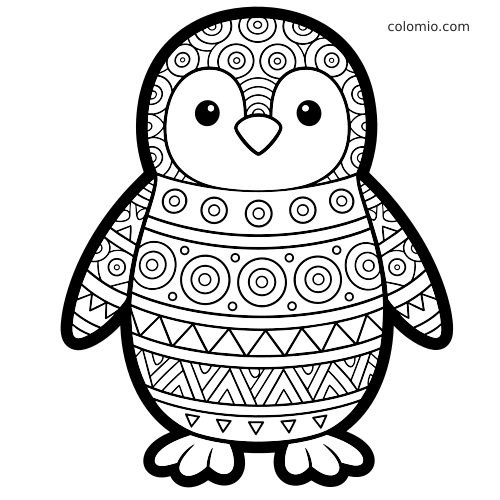
Print our free printable penguin coloring pages — ready-to-print line art, no signup.