

A fairy coloring page is a simple, whimsical drawing designed for children to fill with color, imagination, and personality. These fairy images range from single, large outlines perfect for beginners to more detailed scenes with castles, gardens, and wings for older kids. Each coloring page invites a child to choose colors, experiment with shading, and tell a little story about the fairy they bring to life. Whether a child prefers a tiny sprite with delicate wings or a bold, adventurous fairy prince, the pages are approachable and fun.
These fairy coloring pages are suitable for toddlers, preschoolers, and older kids alike: toddlers can enjoy broad strokes and bright crayons, preschoolers can practice staying inside the lines, and school-age children can work on more intricate designs. Use them at home for rainy afternoons, in the classroom as a calming activity, in homeschool lessons to reinforce themes like nature and storytelling, or on road trips and quiet time to keep hands busy. Beyond being enjoyable, coloring supports fine motor development, color recognition, concentration, and creativity. As children color fairies, they also practice decision-making and build confidence in their artistic choices, making each coloring page a small but meaningful step in learning and play.


Tooth fairy collecting a tooth – colored in by the community
-
by Ania
5 Likes


Tooth fairy climbing onto a bed – colored in by the community
-
by Ania
5 Likes
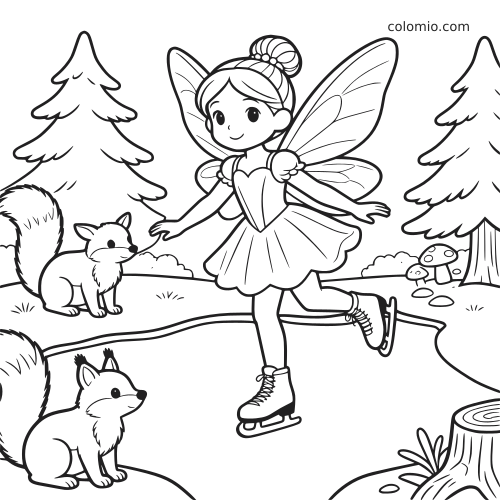
Ice fairy skating with squirrels – colored in by the community
-
by Ania
7 Likes
-
by Isabelle_Leite
6 Likes

-
by Katze
2 Likes


Fairy queen on a throne with attendants – colored in by the community
-
by zofia
10 Likes
-
by Katze
6 Likes

Cute fairy painting baby butterflies – colored in by the community
-
8 Likes


Make Your Fairy Glow Gently: Simple Coloring Tips for Wings, Hair, and Dress
A fairy picture often has lots of small, delicate parts. Coloring slowly helps keep the fairy’s wings, face, and tiny details neat and beautiful.
Quick hint: Start with the biggest areas (dress, hair, skin), then finish with the small details (eyes, patterns, jewelry, wing lines). This keeps the page clean and easy to manage.
What to Watch for While Coloring a Fairy
- Wings: Many fairy wings have thin “vein” lines. Color lightly around these lines so the wing pattern stays visible.
- Soft shading: Wings, cheeks, and dresses look more real with gentle color changes—press lighter near the edges and slightly darker toward the middle (or the other way around).
- Hair strands: Leave a few thin, uncolored streaks to look like shiny hair. This makes the hairstyle look smooth instead of flat.
- Face details: Keep the eyes and eyebrows crisp. Use a sharp pencil or fine crayon tip for tiny areas like eyelashes.
- Clothing folds: If the dress has folds, make the fold lines a little darker and the “raised” parts lighter to show shape.
- Small accessories: Crowns, wands, belts, buttons, and shoes are tiny—color them last to avoid smudges and slipping outside the lines.
Realistic Color Guide for a Fairy (with Color Swatches)
| Fairy Part | Best Realistic Color | Color Hint |
|---|---|---|
| Skin | Light Peach | #F2C6A0 |
| Cheeks (blush) | Soft Pink | #F4A7B9 |
| Hair (blonde) | Golden Blonde | #E6C15A |
| Hair (brown) | Chestnut Brown | #8B5A2B |
| Hair (black) | Deep Brown-Black | #2B1B14 |
| Eyes | Forest Green | #2E6B3F |
| Dress | Leaf Green | #4F8A3B |
| Dress shadows (folds) | Deep Green | #2F5E2E |
| Wings | Very Light Blue-Gray | #DCE6F2 |
| Wing lines (veins) | Cool Gray | #8E99A4 |
| Shoes | Warm Brown | #A06A3B |
| Wand / jewelry | Soft Gold | #D4AF37 |
| Outline touch-ups (optional) | Dark Gray | #3E3E3E |
Helpful Hints for a Neat, Real-Looking Fairy
- Use light pressure on wings first. You can always add a second layer to make them a bit darker.
- Keep highlights on hair and shiny objects by leaving tiny white areas uncolored.
- Match shadows by using a slightly darker version of the same color in folds, under hair, and near the edges of clothing.
- Stay clean by placing a blank sheet of paper under your hand while coloring.
Mini plan: Skin → hair → dress → wings → shoes and accessories → small details (eyes, patterns, outlines).
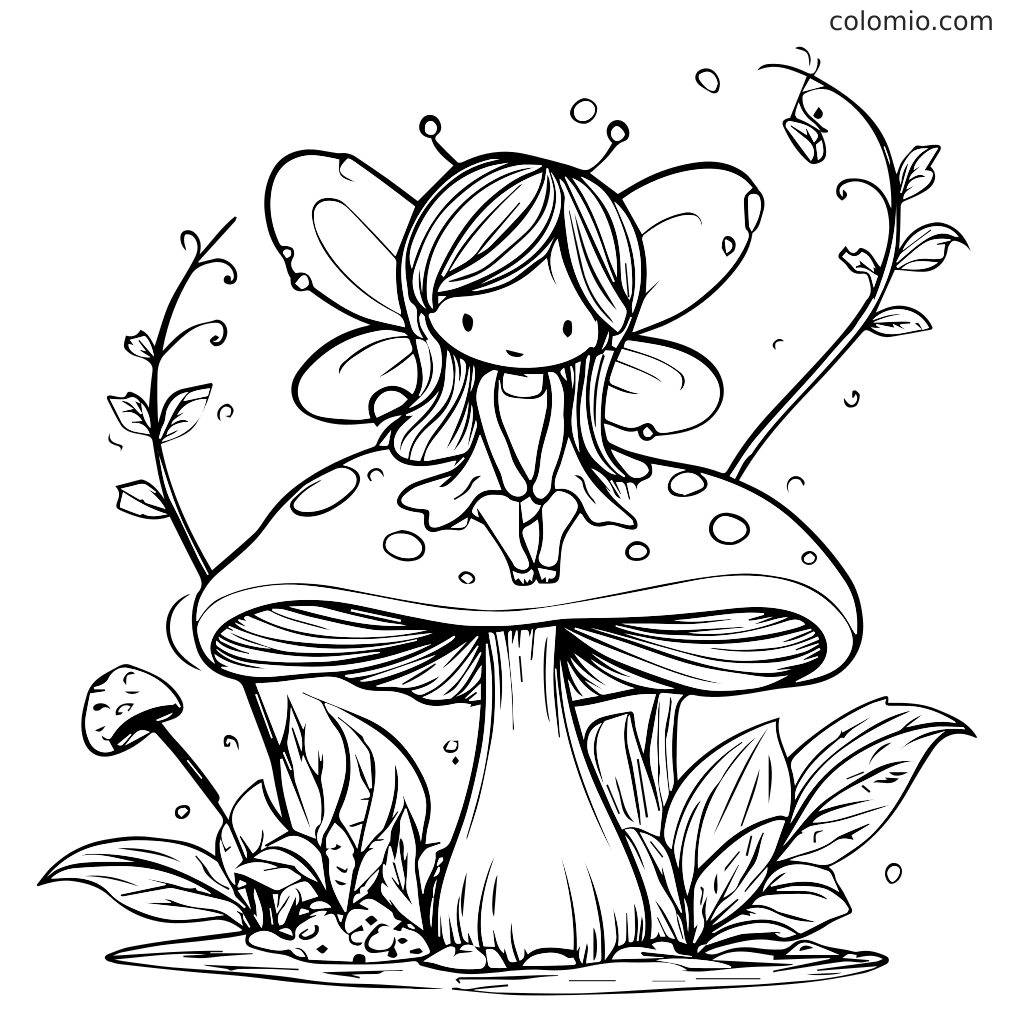
Fairy on a mushroom – colored in by the community
-
by Isabelle_Leite
6 Likes
-
1 Likes
-
0 Likes

Fairy – colored in by the community
-
1 Likes
-
0 Likes


Fairy with magic wand and beautiful dress – colored in by the community
-
by mia
20 Likes
-
4 Likes
-
2 Likes
Scissors, Sparkles, and a Fairy Adventure!
Pop-Up Fairy Wings That Shine
✂️ You need: fairy coloring page, scissors, glue stick, cardstock, crayons or markers, tissue paper (or baking paper), optional glitter
- Color the fairy and cut it out with help.
- Cut two big wing shapes from cardstock.
- Glue tissue paper onto the wings to make them look magical.
- Fold a small tab on each wing and glue the tabs behind the fairy.
- Stand the fairy up by gluing it onto a folded cardstock base.
💡 Supports: fine motor skills, creativity, careful cutting
Fairy Wand for Make-Believe Play
✂️ You need: paper or cardstock, pencil, scissors, tape or glue, a straw or craft stick, ribbon or yarn, optional stickers
- Draw a star, heart, or flower on cardstock and cut it out.
- Decorate the shape with colors, patterns, or stickers.
- Tape or glue the shape to the top of the straw or craft stick.
- Tie ribbon or yarn under the top so it can flutter.
- Wave the wand and add a pretend “magic” sparkle swoosh.
💡 Supports: imagination, hand-eye coordination, creative design
Classroom Fairy Garden Wall Scene
✂️ You need: fairy coloring pages, a large sheet of paper (or poster board), glue, crayons or markers, green paper scraps, cotton balls, leaves (optional), safety scissors
- Color and cut out several fairies for the group.
- Glue the fairies onto the big poster to make a “garden.”
- Tear green paper into grass and glue it along the bottom.
- Add cotton ball clouds and leaf “bushes” around the fairies.
- Draw flowers, mushrooms, and tiny paths to finish the scene.
💡 Supports: teamwork, planning a picture space, storytelling

Smiling fairy – colored in by the community
-
0 Likes

Fairy with bird and stars – colored in by the community
-
11 Likes
-
0 Likes

Fairy with a star – colored in by the community
-
0 Likes

Did You Know? 5 Magical Facts About Fairies
Fairies Have Stories All Over!
People in many places have told fairy stories for hundreds of years, and the details change from country to country—some fairies are tiny, some are tall, and some even live near water or trees. Encyclopedia Britannica
The Tooth Fairy Is Very American
In the United States, many kids put a lost tooth under a pillow and imagine a Tooth Fairy who swaps it for a small surprise—a fun tradition that became especially popular in the 1900s. Library of Congress
Fairy “Wings” Can Be Anything
In pictures, fairy wings aren’t all the same—artists often borrow ideas from real insects like butterflies and dragonflies, then add sparkles, swirls, and patterns to make them look magical. Wikipedia
Fairy Houses Are a Real Craft
Some families build “fairy houses” outdoors using sticks, pinecones, leaves, and stones—nature crafts like this are popular in parks and backyards, especially in many parts of the U.S. National Park Service
Fairies Help Stories Teach Kindness
In lots of children’s tales, fairies use magic to help someone learn a lesson—like sharing, being brave, or telling the truth—so the story feels fun and meaningful at the same time. PBS

Fairy on a flower – colored in by the community
-
0 Likes
-
0 Likes


Fairy with wings and magic wand – colored in by the community
-
3 Likes
-
2 Likes
-
by Katze
1 Likes

Why Kids Love These Fairy Coloring Pages
- Coloring detailed fairy wings and costumes helps children develop fine motor control and pencil grip through focused, small-scale coloring.
- Choosing colors and patterns for different fairies builds color recognition and early design-thinking skills.
- Parents and teachers can quickly print ready-made pages for lesson extensions, indoor recess, or calm-down corner activities.
- These printable pages offer a creative, hands-on screen-free activity that encourages imagination and sustained attention.
Creative Ideas & Activities
- Create fairy puppets by coloring and cutting out images, then gluing them to popsicle sticks or straws for an impromptu puppet show using scrap fabric for wings.
- Make a set of fairy story cards by cutting small scenes or characters from pages and using them as prompts to build collaborative stories in pairs or groups.
- Turn colored fairies into a collage by layering tissue paper, stickers, and sequins on cardstock to practice textures and mixed-media art with simple glue and safety scissors.
- Use fairy pages for alphabet practice by assigning each fairy a letter and having children match objects or stickers that start with that letter to reinforce phonics.
- Practice counting and basic addition by giving children a group of fairy cutouts and asking them to sort, count, and combine for hands-on math games with manipulatives.
- Assemble a classroom fairy garden mural by having each child color a section of a large printed scene, then tape or glue pieces together for a collaborative display.
- Create shadow puppets by mounting colored pages on cardstock, cutting out silhouettes, and using a flashlight to perform simple shadow stories on a blank wall.
- Make bookmarks and gift tags by trimming colored fairies, laminating or gluing them to cardstock, and punching a hole for ribbon to create practical keepsakes.
Frequently Asked Questions
Are these fairy coloring pages free to download and print?
Yes, all coloring pages on this page are free to download and print. You can print as many copies as you need for home, school, or kindergarten activities.
In what file formats are the coloring pages provided and how do I print them?
The coloring pages are available as PDF and JPG files for easy downloading and printing. Open the PDF in a reader or the JPG in any image viewer, choose actual size or fit-to-page, and print on standard letter (8.5″ x 11″) paper.
What ages are the fairy coloring pages suitable for?
These pages are suitable for preschoolers through early elementary ages, roughly 3–8 years old, though older children may enjoy the more detailed designs. Simpler fairy outlines are ideal for kindergarten fine motor practice while detailed images offer a challenge for older kids.
Can I use the coloring pages in my classroom or kindergarten?
Yes, you may use the coloring pages for free in classrooms and kindergarten settings; classroom use is allowed. They are great for centers, art lessons, take-home activities, and calm-down time.
How can I get the best coloring results with crayons, markers, or paint?
For the best results, print on heavier paper (around 90–110 lb / 160–200 gsm) when using markers or watercolor; standard printer paper works well for crayons and colored pencils. Use a backing sheet to prevent bleed-through, choose washable markers for young children, and encourage light layering and blending to achieve smooth, vibrant colors.