

| Free Download | ||||
|---|---|---|---|---|
 |
||||

|
|
Image file | ||
Looking for a template to draw a scary Tyrannosaurus Rex? Then get out your pencil, because here comes the tutorial.
For this drawing you need a pencil, an eraser, an eraser-proof pencil and, if necessary, suitable colors to your taste.
Welcome to our exciting dinosaur drawing adventure! In this step-by-step guide, you will learn how to draw a mighty Tyrannosaurus Rex, complete with all the features that make it so iconic. This tutorial is designed for children and beginners, making it easy and fun for anyone to follow along.
Using basic drawing techniques, you’ll explore how to create the T-Rex’s head, body, limbs, and more with simple shapes and lines. This guide is ideal for kids aged 6 and up, as well as beginners who are just starting their artistic journey. Get ready to bring your dinosaur to life with vibrant colors!
What You Will Need
- 2B pencil for sketching
- Black colored pencil for outlines
- Dark green and olive colored pencils for shading
- Red colored pencil for the tongue
- Eraser for clean corrections
- Drawing paper (A4 or Letter size recommended)

Step 1: Head and torso
Start by sketching the head and torso of your dinosaur. Using a 2B pencil, draw a large oval for the torso and a smaller oval for the head. Position them at different angles to give your dinosaur a dynamic pose. Tip: Keep your lines light so you can easily adjust them later.

Step 2: Neck and tail
Connect the head and torso by drawing a curved neck line. Extend this line outward to form the tail, ensuring it tapers to a point. Visualize the swing of the tail to help you achieve a natural curve. Tip: Imagine the tail as a balancing tool for your T-Rex.

Step 3: Limbs
Draw the limbs by adding arms and legs to your dinosaur. The legs should start thick at the top and taper down to bird-like claws. For the arms, you can use small triangular shapes for hands. Tip: Keep the limbs proportional to the body for a balanced look.

Step 4: First permanent contours
With a black colored pencil, trace over the main outlines of the tail, body, and head. Add details like the mouth and the top line of the head. The lower jaw can be shaped like a broad ‘W’. Tip: Darken the lines that you want to stand out the most.

Step 5: Final silhouette
Continue by outlining the arms and legs, giving them more volume. Draw the final lines slightly off from the initial sketches to create depth. Add a center line to the feet and indicate claws on the hands. Tip: Adding small details can make a big difference in realism.

Step 6: Eyes, teeth and skin folds
Focus on the dinosaur’s head to add eyes, tongue, teeth, and nostrils. Use the outline as a guide to place these features accurately. Tip: Eyes can be expressive, so try giving your T-Rex a lively appearance.
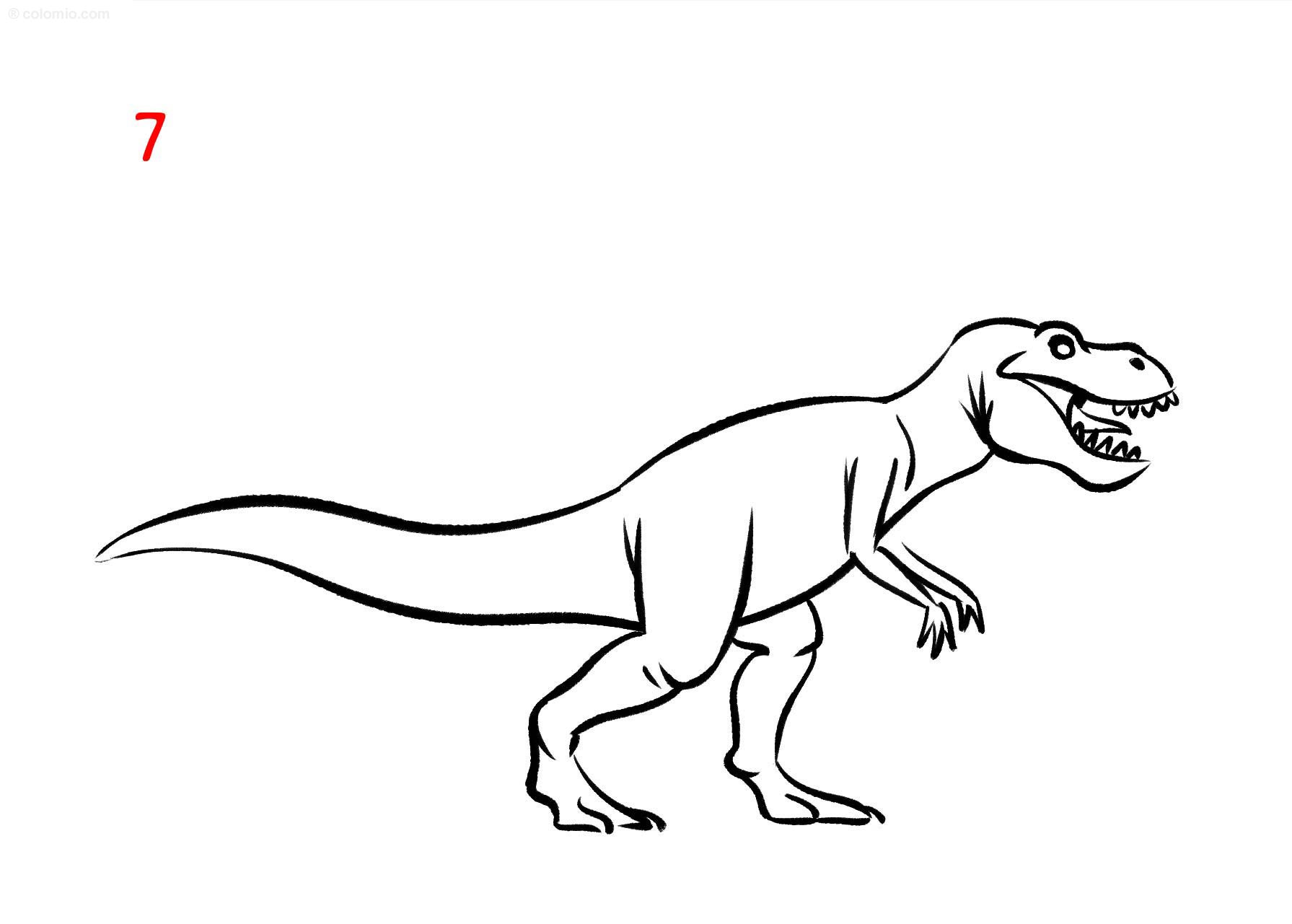
Step 7: Guides
Erase any guide lines that are no longer needed. This will clean up your drawing and make the final contours more prominent. Only the black outline should remain. Tip: Be gentle with your eraser to avoid smudging.

Step 8: Coloring
It’s time to color your T-Rex! Use dark green to olive shades for the upper body and lighter tones for the underside. Color the tongue red and leave the teeth white. Tip: Blend colors softly for a more natural look. Now, watch out for your roaring creation!
More Template Ideas


Your Dinosaur Drawing Is Complete!
Congratulations on completing your dinosaur drawing! You’ve successfully brought a T-Rex to life with skill and creativity. We hope you had fun and learned new techniques along the way. Why not continue your artistic journey with our other drawing tutorials?
Tips for an Even Better T-Rex Drawing
Three anatomical facts make a Tyrannosaurus rex unmistakably a T-Rex: the oversized head, the tiny two-fingered arms, and the massive tail that balances the body. Get those proportions right and almost anything else can look a little off – people will still see a T-Rex.
The head should be about a quarter of the entire body length, and the jaw needs to drop low enough to show several pointed teeth. A short snout reads as a generic lizard; a long, deep jaw reads as a dinosaur predator. Keep one large round eye visible – placing it high on the skull gives that classic alert, hunting expression.
The arms are the funniest part of the T-Rex and also the most often drawn wrong. They should be tiny – only as long as the head – and tucked close to the chest, with just two visible fingers ending in small claws. Don’t reach them outward; let them hang.
The tail is the secret to a believable T-Rex. It should be at least as long as the head and body combined, lifted slightly off the ground in a gentle S-curve. Without that long counter-balancing tail, your dinosaur will look like it’s about to fall on its face.
Other Dinosaurs to Try Next
Once your T-Rex looks right, the same step-by-step approach unlocks a whole prehistoric menagerie. Each one is essentially a small modification of the basic body-and-tail formula:
- Triceratops: Replace the predator head with a wide, frilled skull, three horns (two long over the eyes, one short on the nose), and four sturdy legs instead of two.
- Stegosaurus: A low, four-legged body with a small head, plus the iconic row of diamond-shaped plates running along the back and four spikes on the tail.
- Brachiosaurus: A massive body with four pillar-like legs and an enormously long neck rising upward like a giraffe.
- Velociraptor: Smaller and slimmer than a T-Rex, leaning forward in a horizontal pose with a long stiff tail and a single large curved claw on each foot.
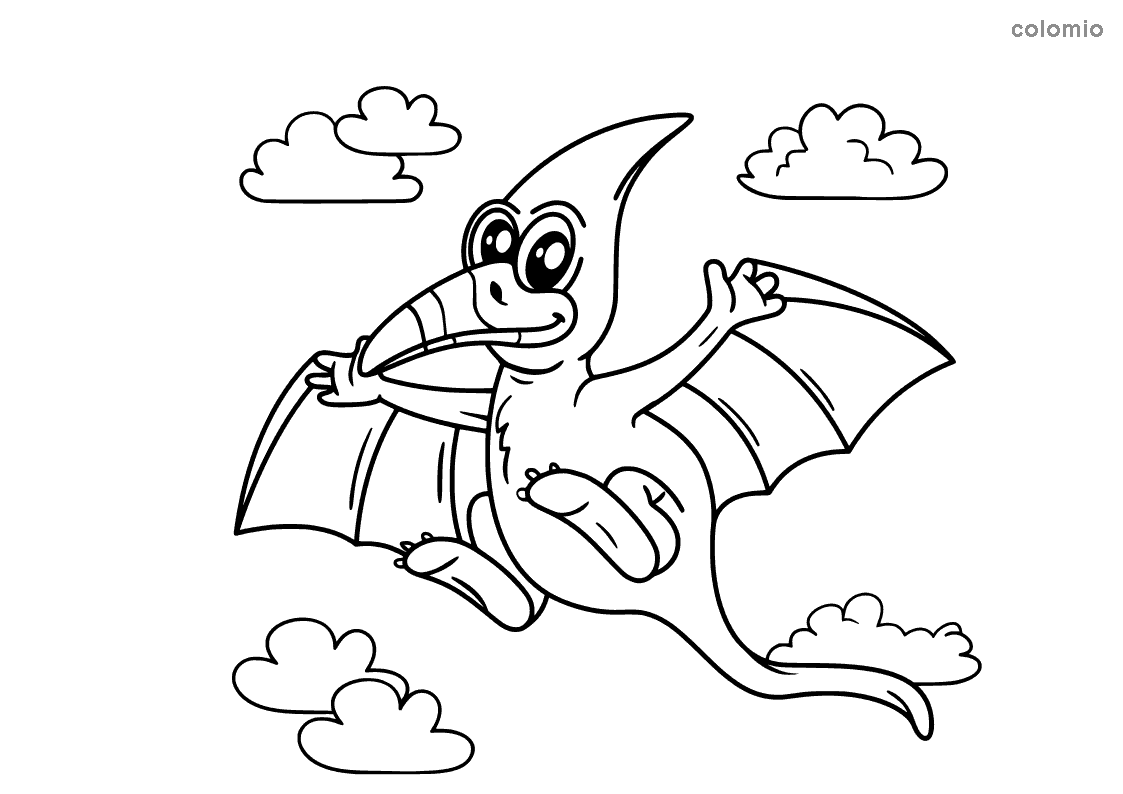
- Pterodactyl: Not technically a dinosaur, but a great pairing – long, thin wings, a pointed crested head, and clawed feet ready to grip.
Drawing the same scene with two or three different dinosaurs is one of the best ways for kids to learn observation and proportion at the same time.
Build a Prehistoric Scene
Your T-Rex will look ten times more impressive in a small Jurassic landscape. A few quick background ideas:
- Volcano in the distance: A simple gray triangle with red lava streaks and a curl of black smoke at the top. Instantly says “Cretaceous period.”
- Prehistoric jungle: Tall ferns and palm-like leaves in three shades of green. Don’t draw individual leaves – suggest them with quick zig-zag strokes.
- Meteor sky: A bright orange streak across a darker red-purple sky. Dramatic and a great storytelling hook.
- Footprints in mud: A row of three-toed footprints leading away from your dinosaur. Very satisfying detail for kids.
Friendly T-Rex vs. Scary T-Rex
Same dinosaur, very different mood – and the difference comes down to four small details:
- Mouth: Closed and curved upward = friendly. Open with visible teeth = scary.
- Eyes: Big round eyes with white highlights = cute. Narrow slits with a heavy brow ridge = menacing.
- Posture: Standing upright, head high = curious and gentle. Leaning forward, head low = hunting.
- Color palette: Bright greens and yellows = cartoon T-Rex. Deep browns, dark reds, and grays = realistic predator.
For young kids, always go cartoon-friendly – bright and round shapes, smiling mouth, no visible teeth.
Common Mistakes to Avoid
1. The arms are too long. Long arms turn your T-Rex into a generic lizard. They must be smaller than the head.
2. The tail drags on the ground. A tail flat on the ground makes the dinosaur look heavy and lifeless. Lift it slightly and add a curve.
3. The teeth are too neat. Real T-Rex teeth are jagged and uneven in size. Don’t draw them as a perfect row of identical triangles.
4. The legs are too thin. A T-Rex has powerful, muscular thighs. Draw the upper leg as a thick teardrop, not a stick.
5. Wrong number of fingers. A real T-Rex has exactly two fingers on each hand. Three or four turns it into a different theropod.
Frequently Asked Questions About Drawing a Dinosaur
What type of paper is best for drawing?
We recommend using A4 or Letter size drawing paper for best results.
Can I use different colors for my dinosaur?
Absolutely! Feel free to use any colors you like to make your dinosaur unique.
What if I make a mistake while drawing?
Don’t worry! Use an eraser to gently remove unwanted lines and try again.
How can I make my dinosaur look more realistic?
Focus on proportions and add small details like skin folds and shading to enhance realism.
Is it okay if my drawing doesn’t look exactly like the tutorial?
Of course! Art is all about personal expression, so have fun and make your drawing your own.
Take a picture and send it to show@colomio.com – we publish it on www.colomio.com!
All tutorials and images are copyrighted by happycolorz GmbH. Interested in using it? Please send a mail to info@colomio.com.
More ideas for drawing
-

Airplane drawing -

Plane drawing easy -

Apple drawing -

Bicycle drawing -

Ship drawing -

Car drawing -

Car drawing easy -

Cat drawing -

Cow drawing -
Dinosaur drawing -

Dog drawing -

Puppy drawing -

Dragon drawing -

Digger drawing -

Fairy drawing -

Giraffe drawing -

Lion drawing -

Mermaid drawing -

Moon drawing -

Motorcyle drawing -

Penguin drawing -

Pig zeichnen (einfach) -

Princess drawing -

Reindeer drawing -

Rooster drawing -

Santa Claus drawing -

Shark drawing -

Sheep drawing -

Strawberry drawing -

Sunflower drawing -

Tiger drawing -

Tractor drawing -

Train drawing -

Tree drawing -

Tree drawing easy -

Tulip drawing -

Turtle drawing -

Unicorn drawing -

Unicorn drawing easy -

Witch drawing
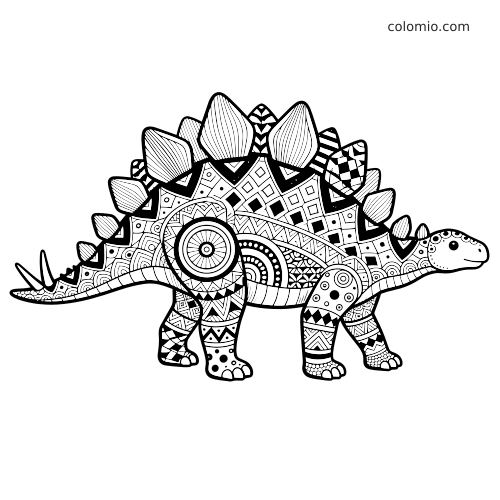
Print our free printable dinosaur coloring pages — ready-to-print line art, no signup.
More Crafting Ideas
-

Bee craft -

How to Make a Paper Boat -

How to make an envelope -

Ladybug Craft -
Origami Boat -

Butterfly Craft