
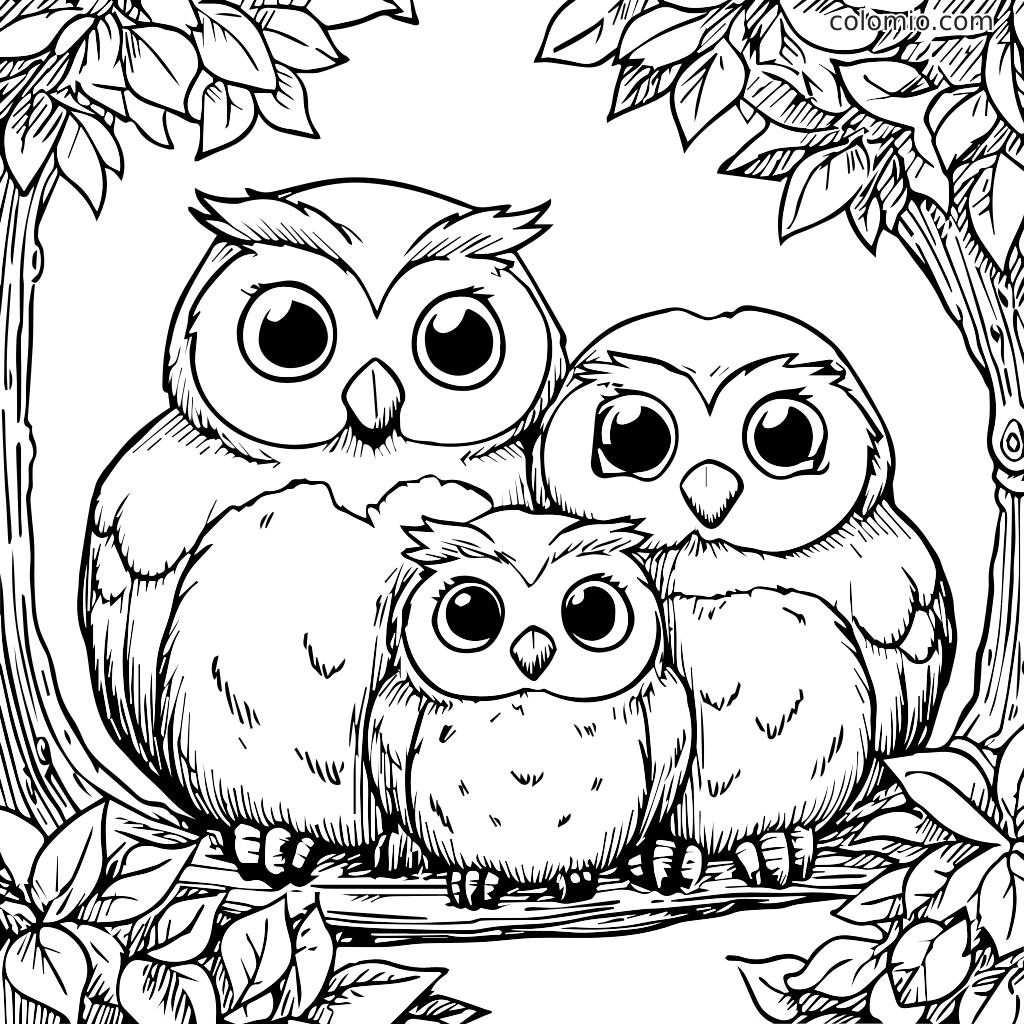
This owl coloring page is a simple, friendly drawing designed to invite creativity and calm — an easy way for children to explore color, shape, and pattern. These owl images can be printed as a single coloring page for a quick activity or offered as a set of coloring pages for a longer project. The pages show owls in clear lines and varying levels of detail so kids can choose what matches their skill and mood: big-eyed, whimsical owls for toddlers and preschoolers and more intricate owl drawings for older kids.
These coloring pages are suitable for toddlers, preschoolers, and older children alike, and they work well at home, in the classroom, for homeschool lessons, during travel, or as a quiet-time activity. Beyond being fun, coloring an owl helps build fine motor skills, color recognition, hand-eye coordination, patience, and early pre-writing control. It also sparks creativity and storytelling as children invent names and habitats for their owls. Teachers and parents can use the pages to introduce topics like nocturnal animals, patterns, and habitats in a gentle, hands-on way. Warm and accessible, these owl coloring pages encourage mindful play, learning, and a cozy moment of focus for kids of many ages.

Zentangle owl perched on a branch – colored in by the community
-
by sina
3 Likes


Owl on a sign – colored in by the community
-
3 Likes
-
2 Likes

-
1 Likes

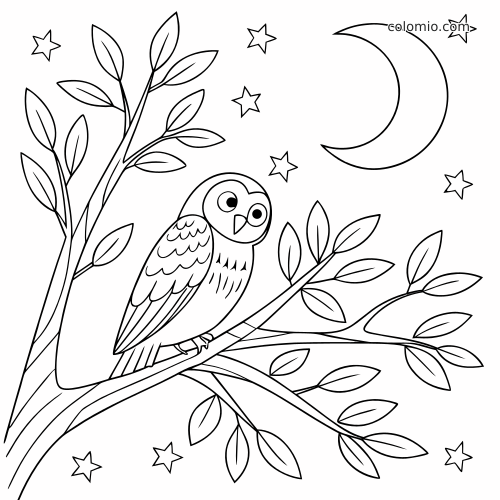
Detailed owl on a moonlit branch – colored in by the community
-
by freja
15 Likes
-
0 Likes

Cute white snowy owl outline – colored in by the community
-
by Katze
0 Likes


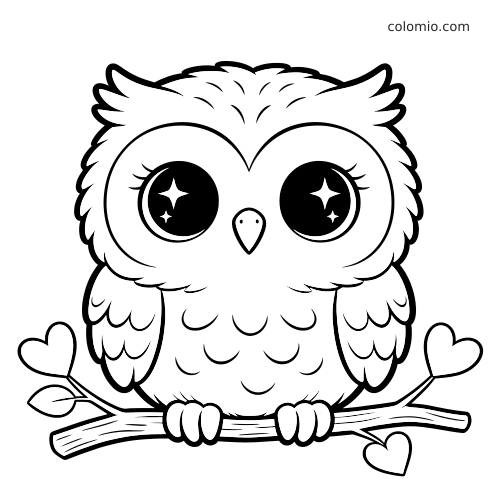
Cute kawaii owl on a heart branch – colored in by the community
-
3 Likes
-
by Isabelle_Leite
2 Likes
Make Your Owl Look Real – Simple Coloring Tips That Work
Owls are full of tiny details that make them look calm, wise, and fluffy. While coloring, children can create a more lifelike owl by paying attention to soft feather textures, clear patterns, and the owl’s bright, round eyes. Slow, careful coloring helps the owl look neat and natural.
What to Watch for While Coloring Your Owl
- Feathers and fluff: Use short, gentle strokes that follow the body shape (down the belly, outward on the wings) to make feathers look soft.
- Facial disk (the “face circle”): Many owls have a lighter face area. Keep this section smoother and a bit lighter than the rest of the head.
- Wing patterns: Owls often have stripes or speckles. Color the wing in layers so the pattern stays visible and doesn’t get covered up.
- Big eyes: Leave a tiny white spot uncolored in each eye to look like a shiny reflection. This makes the owl feel more alive.
- Beak and talons: These parts are usually darker and smoother than feathers. Use even coloring and clean edges so they stand out.
- Branch or tree area (if included): Keep the owl’s body colors separate from the background so the owl doesn’t “disappear” into the wood.
Helpful hint: Start with light colors first, then add darker shading around wing edges, under the belly, and near the sides of the face to help the owl look round and cozy.
Realistic Owl Colors (With Easy Color Swatches)
These colors match many common owl types (like barn owls, tawny owls, and great horned owls). Using a few browns plus a creamy white creates a natural owl look.
| Body Part | Realistic Color | Color Hint |
|---|---|---|
| Face (facial disk) | Cream | #F3E5C6 |
| Belly (lighter feathers) | Warm Beige | #D9C6A3 |
| Back and wings (main feathers) | Medium Brown | #8B5E3C |
| Wing stripes / spots | Dark Brown | #4E342E |
| Head tufts / extra dark markings | Deep Umber | #2F1B12 |
| Eyes (iris) | Golden Yellow | #F2C94C |
| Pupil | Black | #000000 |
| Beak | Horn Gray | #7A6F63 |
| Talons | Charcoal Gray | #4A4A4A |
| Tree branch (if shown) | Wood Brown | #6D4C41 |
Neat Finishing Touches for a Real Owl Look
- Keep the face lighter than the wings so the owl’s expression stands out.
- Add the darkest brown along wing edges and under the body to show shadows.
- Color around patterns carefully so stripes and spots stay crisp and easy to see.


Scissors, Glue, Hoot! Owl Crafts Ready to Fly
Make a Fluffy Cotton Owl
✂️ You need: owl coloring page, cotton balls, glue stick or white glue, crayons or markers, child-safe scissors (optional)
- Color the owl’s eyes, beak, and feet.
- Pull cotton balls apart to make soft, fluffy pieces.
- Glue the cotton onto the owl’s belly and wings like feathers.
💡 Supports: fine motor skills, sensory play, creativity
Toilet Roll Owl Perch
✂️ You need: toilet paper roll, colored paper or paint, glue, crayons or markers, child-safe scissors, googly eyes or paper circles
- Cover the toilet roll with colored paper or paint.
- Fold the top edges inward to make two pointy “ear” corners.
- Glue on eyes and draw a beak and feather lines.
💡 Supports: hand strength, shape building, imagination
Classroom Owl Branch Wall Scene
✂️ You need: owl coloring pages (several), large paper or poster board, brown paper or a real twig, glue or tape, crayons or markers, leaf cutouts (paper or real leaves)
- Color and cut out each owl, with adult help.
- Add a big branch to the poster using brown paper or a twig.
- Glue the owls and leaves onto the branch to make a group display.
💡 Supports: teamwork, planning, creative storytelling
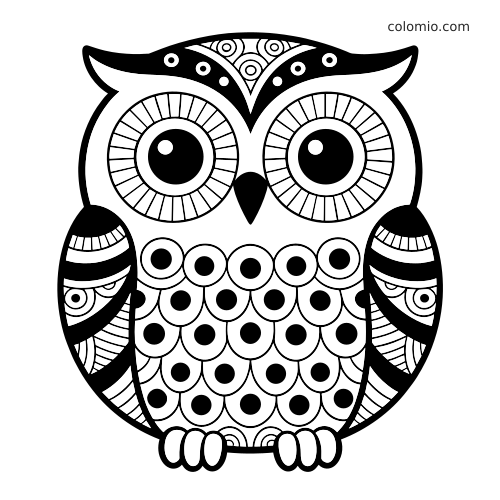
Easy zentangle owl with bold patterns – colored in by the community
-
by mia
20 Likes

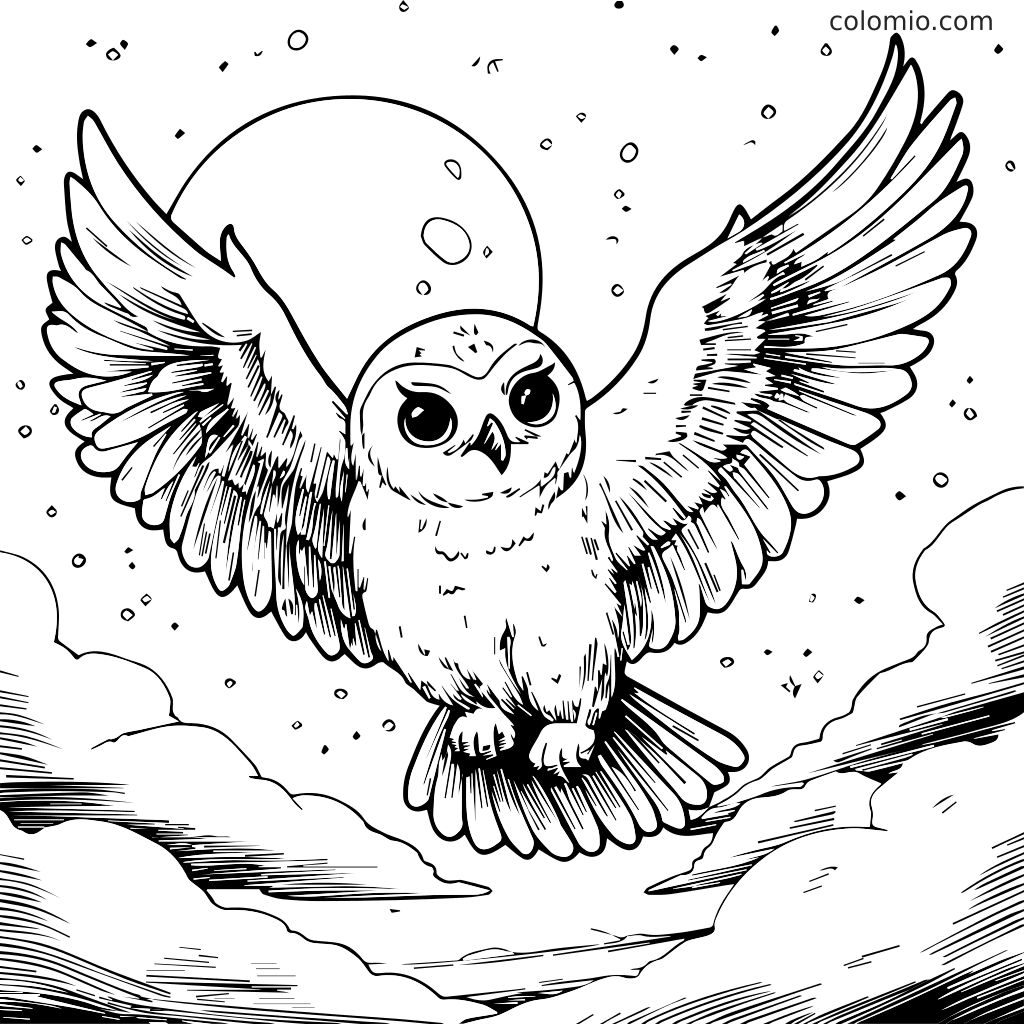

Did You Know? 5 Super-Cool Facts About Owls
They fly like quiet shadows
Owls have special feather edges that help them swoosh through the air with almost no sound, so prey may not hear them coming. National Geographic
Big eyes, but they don’t roll
An owl’s eyes are shaped like tubes and are held in place, so owls can’t move their eyes around like people—turning their heads helps them look in different directions. Wikipedia
Ears that “see” in the dark
Many owls have ears set at slightly different heights, which helps them pinpoint tiny sounds and find animals even when it’s very dark. Smithsonian Magazine
Pellet pop-out surprise!
Owls don’t chew like we do; later they cough up a dry “pellet” made of bones and fur, and scientists (and classrooms!) study pellets to learn what owls eat. National Wildlife Federation
America’s tiny backyard owl
In many U.S. states, the Eastern Screech-Owl can live near people in parks and neighborhoods, and it may be gray or reddish-brown to match tree bark. U.S. Fish & Wildlife Service

Adorable owl character – colored in by the community
-
3 Likes
-
2 Likes
-
0 Likes


Easy long-eared owl – colored in by the community
-
2 Likes

Owl with twisted head – colored in by the community
-
2 Likes
-
1 Likes

Simple barn owl – colored in by the community
-
2 Likes
-
1 Likes
-
0 Likes


Short-eared owl – colored in by the community
-
1 Likes
-
0 Likes


Why Kids Love These Owl Coloring Pages
- They build fine motor skills and color recognition as children practice staying inside the lines and choosing color combinations for each owl.
- They provide ready-to-print activities that help parents and teachers fill short lessons, morning work, or reward time with minimal prep.
- They offer a calming, screen-free activity that encourages focus, imagination, and hands-on creative play with owls.
- They support early learning tasks like counting feathers, matching colors, and tracing letters when used with simple guided prompts.
Creative Ideas & Activities
- Make a paper owl puppet by coloring a page, cutting out the owl, attaching it to a popsicle stick, and using it for puppet storytelling or finger plays.
- Create an owl counting game by numbering several owls, having children place the correct number of stickers or pom-poms on each one, and practicing simple addition.
- Use a colored owl as a story starter: each child colors an owl and then writes or tells a short tale about its nighttime adventure to build literacy and imagination.
- Arrange classroom owls into a “night sky” mural where each student decorates an owl and adds stars or habitat elements to practice collaboration and display work.
- Turn two copies of an owl page into a memory matching game by coloring different patterns, cutting into cards, and taking turns finding pairs to boost memory skills.
- Make owl masks by enlarging a page, coloring it, cutting eye holes, and attaching elastic or string for role-play and social-emotional learning activities.
- Combine art with science by having kids color owls, label body parts, and research basic owl facts like habitat and diet to connect art to STEM learning.
- Use the owl outline as a stencil for texture art—children glue tissue paper, feathers, or fabric scraps onto the owl to explore sensory collage techniques.
Frequently Asked Questions
Are these coloring pages free to download and print?
Yes, all coloring pages on this page are free to download and print for personal and classroom use. You can print them at home or use them in school and kindergarten without cost.
What file formats are the coloring pages available in for printing?
The pages are provided in common printable formats such as PDF and JPG so you can choose the best option for your device and printer. PDFs are ideal for consistent print layout, while JPGs are handy for quick image printing or editing.
What ages are the owl coloring pages suitable for?
These pages are suitable for a wide age range, from toddlers and preschoolers to early elementary students, with simpler owls for younger children and more detailed designs for older kids. Teachers and parents can adapt activities and materials to match each child’s skill level.
Can I use the coloring pages in my classroom or kindergarten?
Yes, you may use these coloring pages for free in your classroom or kindergarten; classroom use is allowed and encouraged. They work well for group activities, centers, and take-home packets.
How can I get the best coloring results with crayons, markers, or paper?
For crayon or colored pencil detail, use standard printer paper or slightly heavier paper; for markers or mixed-media projects, use heavier paper or light cardstock to prevent bleed-through. Test markers on a scrap, use a protective sheet under the page, and combine materials—crayons for texture and markers for bold accents—for the best results.