
A princess coloring page can be a simple, joyful way for children to step into imaginative stories while practicing new skills. These illustrations range from bold, simple outlines for beginners to more detailed scenes for older kids, so each princess image invites creativity without pressure. A single coloring page can spark storytelling, prompt conversations about colors and clothing, and become the starting point for crafts or pretend play.
These princess coloring pages are suitable for toddlers, preschoolers, and older kids alike: toddlers enjoy the large shapes and bright crayons, preschoolers build fine motor control as they stay inside the lines, and older kids can experiment with shading, mixed media, or creating backstories for their princess characters. Use them at home for quiet time, in the classroom as part of a lesson, in homeschool sessions to reinforce vocabulary and sequencing, or on travel days to keep little hands happily engaged. Beyond fun, these pages support creative development, color recognition, hand-eye coordination, attention span, and early writing readiness. They also encourage social skills when children share materials or collaborate on a princess scene. Warm and approachable, these coloring pages offer a gentle, developmental activity that fits many routines and sparks plenty of imaginative play.


Princess side profile in the garden – colored in by the community
-
10 Likes


Royal family waving from balcony – colored in by the community
-
by lily
21 Likes


Make Your Princess Look Royal: Simple Coloring Tips That Sparkle
A princess coloring page is full of lovely details—smooth fabric, shiny jewels, and gentle facial features. Coloring slowly and carefully helps the princess look neat, bright, and truly royal.
What to Pay Special Attention to While Coloring
- Face and hands: Use light pressure and small strokes so the skin looks smooth, not streaky.
- Hair strands: Follow the direction of the hair (top to bottom or in gentle curves). Leave a tiny white line for shine.
- Dress folds: Color darker near the folds and lighter on the wide, flat parts to make the gown look like real fabric.
- Patterns on the dress: If there are dots, swirls, or lace-like shapes, keep them clear by coloring around them carefully.
- Crown and jewelry: Add shine by leaving small uncolored spots on “metal” areas and making gems a little darker on one side.
- Small accessories: Shoes, gloves, ribbons, and buttons look best when colored with sharp, tidy edges.
- Background details: If there are stars, curtains, or a castle, choose softer colors so the princess stays the main focus.
Helpful hint: Start with the biggest areas (dress, hair) and finish with the tiny details (jewels, patterns). This keeps the page clean and easier to manage.
Realistic Color Guide for a Princess (With Color Swatches)
These classic, realistic colors match the look of traditional royal clothing and accessories. They work well for most princess drawings.
| Part of the Picture | Realistic Color Idea |
|---|---|
| Skin (light) | Light Peach |
| Skin (medium) | Warm Beige |
| Skin (deep) | Deep Brown |
| Cheeks (soft blush) | Soft Pink |
| Hair (blonde) | Golden Blonde |
| Hair (brown) | Chestnut Brown |
| Hair (black) | Soft Black |
| Dress (royal blue) | Royal Blue |
| Dress (rose) | Rose Pink |
| Dress (lavender) | Lavender |
| Dress trim (light highlight) | Pale Gold |
| Crown / metal details | Gold |
| Necklace / silver details | Silver |
| Ruby jewel | Ruby Red |
| Sapphire jewel | Sapphire Blue |
| Emerald jewel | Emerald Green |
| Shoes | Black |
| Gloves | White |
| Background (sky) | Light Sky Blue |
Neat Coloring Tricks for a Clean, Royal Finish
- Outline tricky edges (like the crown and sleeves) first, then fill in the middle.
- For shiny metal, press a little harder on one side and keep the other side lighter.
- For fabric, use long strokes that follow the shape of the dress instead of scribbles.
- Let one color area “rest” before coloring right next to it to avoid smudges.
Quick check: Tiny white spots on the crown and jewels make them look glossy, like real treasure.

Cute princess with a magic mirror – colored in by the community
-
by lily
25 Likes
-
by Ania
8 Likes


Cute princess feeding a unicorn – colored in by the community
-
by beatriz
26 Likes

Princess and prince dancing together – colored in by the community
-
4 Likes
-
by mia
1 Likes
Scissors, Glue, Sparkle! Princess Crafts Fit for a Castle
Fold-and-Stand Princess Paper Doll
✂️ You need: finished princess coloring page, scissors, glue stick, cardstock or cereal box cardboard, crayons/markers, tape (optional)
- Color the princess and cut her out carefully.
- Glue the princess onto cardstock and let it dry.
- Cut out the stronger princess shape again.
- Cut a small paper strip, fold it into a triangle stand, and glue it to the back.
💡 Supports: fine motor skills, careful cutting, imaginative play
Shiny Crown Headband in Minutes
✂️ You need: colored paper or cardstock, scissors, glue stick, crayons/markers, stickers or foil scraps (optional), tape or stapler (adult help)
- Cut a long paper strip that fits around the head.
- Cut a crown shape from another piece of paper.
- Decorate the crown with patterns, stickers, or tiny foil “gems.”
- Glue the crown onto the strip and close the band with tape or a staple.
💡 Supports: creativity, pattern making, hand-eye coordination
Classroom Castle Wall Gallery
✂️ You need: several princess coloring pages, a large sheet of paper or poster board, glue sticks, crayons/markers, scissors (optional), paper rectangles for “bricks” (optional)
- Color the princess pages and write each child’s name at the bottom.
- Glue a big sheet of paper onto the wall or place it on a table as the “castle wall.”
- Glue the princess pictures onto the big sheet to make a royal gallery.
- Add paper “bricks,” flags, and hearts around the pictures to finish the castle look.
💡 Supports: teamwork, planning a layout, pride in finished work


Did You Know? 5 Royal Facts About Princesses
Princess Is a Real Title
A princess can be a king or queen’s daughter, or someone who marries into a royal family. It’s a special title, not just a fancy dress-up word. Encyclopedia Britannica
America Had a “Princess” Too!
Pocahontas is often called a “princess,” but her real Powhatan title was different. Her story is part of early American history in Virginia. National Park Service
Crowns Can Be Surprisingly Heavy
Some royal crowns are made with gold and gems, so they can feel heavy on a head. That’s why special headbands or padding may be used to help them fit. Smithsonian Magazine
Princesses Had Big Responsibilities
In history, many princesses learned languages, music, and how to speak to crowds. Some even helped with charities and important public events. History Channel
A “Princess” Lives in the Ocean
The queen angelfish is sometimes nicknamed the “princess of the sea” because of its bright, royal-looking colors. It swims in warm ocean waters near Florida and the Caribbean. NOAA


Princess with strapless dress and bow – colored in by the community
-
3 Likes
-
2 Likes
-
2 Likes


Princess wearing a heart dress – colored in by the community
-
by lily
2 Likes


Princess with a big bow on her dress – colored in by the community
-
14 Likes
-
4 Likes
-
1 Likes
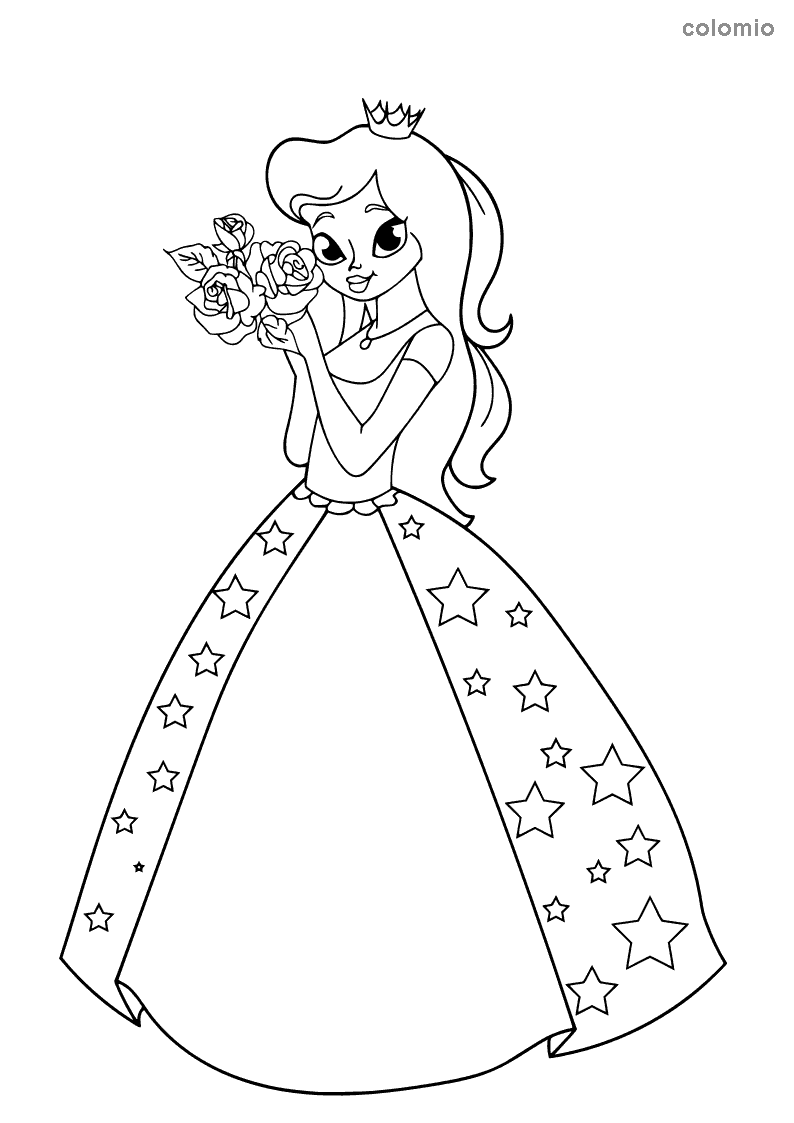
Princess with roses and star dress – colored in by the community
-
16 Likes
-
13 Likes
-
12 Likes


Princess – colored in by the community
-
1 Likes
-
0 Likes

Princess with strapless dress – colored in by the community
-
7 Likes
-
2 Likes
-
0 Likes


Princess riding a horse – colored in by the community
-
4 Likes
-
2 Likes
-
0 Likes


Cute princess with beautiful dress – colored in by the community
-
by Ania
2 Likes


Sweet princess with magic wand – colored in by the community
-
1 Likes
Why Kids Love These Princess Coloring Pages
- Princess coloring pages help children build fine motor skills and hand-eye coordination as they practice staying inside lines and controlling crayons or pencils.
- Teachers and parents appreciate that the pages are ready to print and use for quick activities, lesson ties, or calm-down centers with minimal prep.
- As a screen-free activity, these princess pages encourage focused creativity and give children a tactile, hands-on way to unwind without electronics.
- Coloring princess scenes sparks storytelling and vocabulary development when kids describe characters, outfits, and settings while they work.
Creative Ideas & Activities
- Make paper crowns by printing a princess portrait, coloring it, cutting a decorative strip, and attaching it with tape or staples to fit a child’s head—use stickers and glitter for extra sparkle.
- Create character backstories: have each child color a princess and then write or tell a short story about her kingdom, friends, and favorite things to build narrative skills.
- Turn pages into a simple math game by adding numbered stickers to elements and asking kids to count, add, or sort by color to combine art with arithmetic practice.
- Use color-by-number overlays: write numbers lightly on a printed princess page and provide a key so children practice number recognition while coloring.
- Cut and collage: print several princess pages, cut out dresses or accessories, and let kids mix-and-match pieces on a blank sheet to design new outfits using glue and scissors.
- Set up a classroom gallery where students display their princess art, rotate themes weekly, and vote on fun categories like “most imaginative outfit” to build community and pride.
- Make puppets by gluing a colored princess image to cardboard and attaching a popsicle stick for storytelling or a simple puppet show with friends.
- Create a memory matching game by printing two copies of a princess page, coloring them differently, cutting into cards, and playing a flip-and-match game to boost focus and memory.
Frequently Asked Questions
Are these princess coloring pages free to download and print?
Yes, all coloring pages on this page are free to download and print. You can use them at home, in school, and in kindergarten without cost.
What file formats are the printable pages available in and how should I print them?
The pages are available as common formats such as PDF and JPG so you can choose what works best for your device. For best quality print PDFs at 8.5×11 inches with “fit to page” or actual size selected and use a standard home or school printer on plain or slightly heavier paper.
What ages are the princess coloring pages suitable for?
These pages are suitable for a wide age range, from preschool and kindergarten up through early elementary students, with simpler designs for younger children and more detailed illustrations for older kids. Teachers can select pages based on skill level and attention span.
Can I use these coloring pages in my classroom or kindergarten?
Yes, classroom use is allowed and encouraged; you may download and print the pages for free to use in school activities, centers, or craft time. They work well as an easy-to-prepare resource for group projects and individual practice.
How can I get the best coloring results with these princess pages?
Use slightly heavier paper (24 lb or light cardstock) to prevent marker bleed-through and to make colors look richer; crayons and colored pencils are great for young children, while markers and gel pens work well for bolder color. Place a scrap sheet underneath when using markers, encourage layering and blending for depth, and provide sharpeners and erasers so kids can tidy details as they go.