
A horse coloring page can be a gentle, joyful way to bring these beautiful animals into a child’s day. Each horse coloring page is a simple, printable drawing that focuses on clear lines and friendly shapes so kids can explore color, pattern, and texture at their own pace. Whether the image shows a pony trotting, a mare grazing, or imaginative patterned horses, these pages invite children to slow down, notice details, and make creative choices. The horse images are approachable and comforting for little hands while still offering variety for older children.
These coloring pages are suitable for toddlers, preschoolers, and older kids alike: younger children can practice scribbling and basic color recognition, while school-age children can work on blending, shading, and storytelling about the horses they color. Use them at home for quiet time, in the classroom as a calming activity, in homeschool lessons about animals, or on car trips and flights to keep kids engaged during travel. Beyond fun, horse coloring pages support fine motor control, hand-eye coordination, focus, and early literacy when children describe their scenes. They also encourage creativity, confidence, and a sense of accomplishment—simple, hands-on learning that feels playful and relaxed.
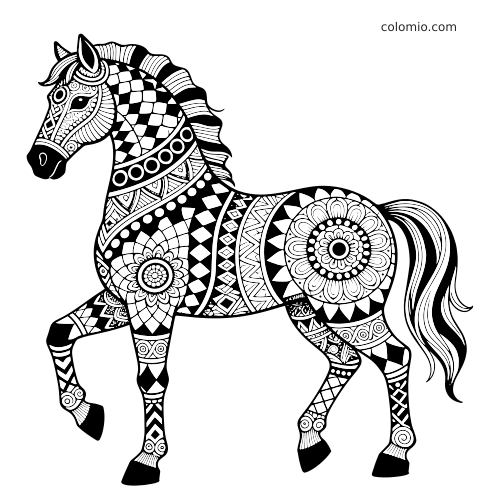
Detailed zentangle horse design – colored in by the community
-
by mia
38 Likes

-
by Ania
8 Likes

-
4 Likes


Wild mustang rearing on rock – colored in by the community
-
2 Likes
-
1 Likes
-
by user-6aha42
1 Likes


Prancing Shire draft horse – colored in by the community
-
1 Likes

Simple Shire draft horse outline – colored in by the community
-
2 Likes
-
2 Likes

Cute trotting Shetland pony – colored in by the community
-
3 Likes
-
0 Likes


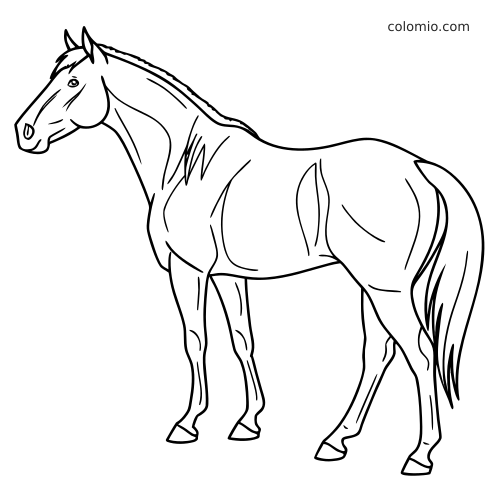
Simple standing quarter horse – colored in by the community
-
0 Likes
-
0 Likes
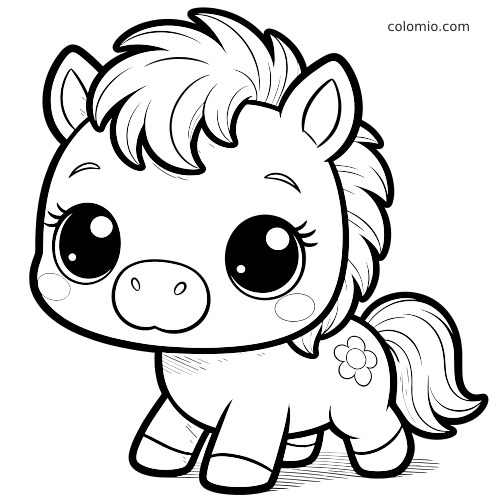
Cute kawaii pony with flower – colored in by the community
-
by Ania
32 Likes
-
by Ania
9 Likes
-
1 Likes

Cute kawaii horse with big eyes – colored in by the community
-
by Ania
2 Likes
-
0 Likes

Cartoon horse on pasture at sunset – colored in by the community
-
by paula
0 Likes

Simple horse grazing at sunset – colored in by the community
-
0 Likes
Bring Your Horse to Life: Simple, Realistic Coloring Tips
A horse looks extra beautiful when its coat, mane, and hooves are colored with care. Use gentle strokes that follow the direction the hair would grow, and keep the darker shades for shadows under the belly, around the legs, and near the neck.
Quick hint: Start with light colors first. It is easier to add darker shading than to “erase” a dark crayon or marker.
What to Pay Special Attention to While Coloring
- Coat (fur direction): Color in smooth, slightly curved strokes to make the horse look soft and real.
- Mane and tail (hair strands): Leave a few tiny white gaps between lines so the hair looks shiny, not like a flat block.
- Muscle shapes: Horses have rounded shoulders, a strong chest, and powerful legs. Add a little darker color along edges to show these shapes.
- Face details: Keep the eye area neat and add a small highlight (a tiny uncolored dot) to make the eye look bright.
- Leg markings: If the horse has “socks” (lighter lower legs), make the edge soft, not a hard line.
- Hooves: Hooves are not usually the same color as the coat. Use gray-browns and add a darker line near the bottom for depth.
Realistic Horse Colors (With Handy Swatches)
| Horse Part / Coat Type | Color Suggestion | Swatch | Hex Code |
|---|---|---|---|
| Bay coat (common) | Reddish Brown | #8B4A2F | |
| Chestnut coat | Warm Copper Brown | #A24B2A | |
| Black coat / points | Deep Black | #1B1B1B | |
| Gray coat | Medium Gray | #8E8E8E | |
| Light gray highlights | Light Gray | #D6D6D6 | |
| White markings (blaze, star, socks) | Soft White | #F5F5F5 | |
| Mane & tail (bay/black horses) | Charcoal Black | #2A2A2A | |
| Mane & tail (chestnut horses) | Dark Auburn Brown | #6F2F1C | |
| Muzzle shading (nose area) | Warm Gray-Brown | #7B6A5A | |
| Hooves | Gray-Brown | #6B625A | |
| Eye (iris) | Dark Brown | #3B2416 |
Easy Shading Hints for a More Realistic Horse
- Make shadows a little darker under the belly, between the legs, and where the neck meets the body.
- Keep the top of the back and the upper neck a bit lighter, as if sunlight is shining there.
- For the mane and tail, press harder near the roots and lighter toward the ends to create a natural fade.
Neat finishing touch: Outline the nostril and mouth gently with a darker shade of the coat color, not pure black, to keep the face looking soft and real.

Horse jumping over a log – colored in by the community
-
5 Likes
-
by user-6aha42
1 Likes

Horse and rider clearing a jump – colored in by the community
-
8 Likes
-
by Nora
7 Likes
-
0 Likes

Horse and rider jumping a fence – colored in by the community
-
by user-6aha42
4 Likes
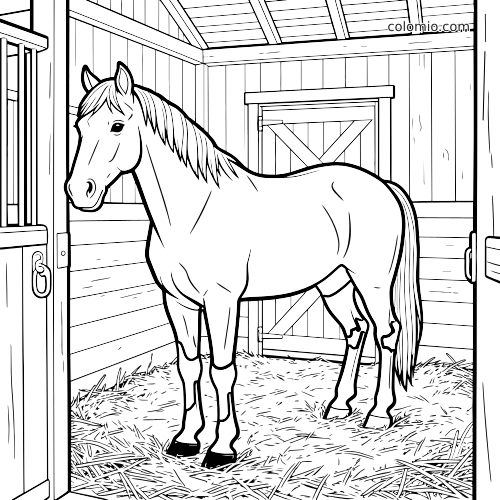
Detailed horse standing on hay – colored in by the community
-
15 Likes
-
1 Likes
-
1 Likes
Scissors, Glue, Giddy-Up! Horse Crafts Kids Can Make
Make a Standing 3D Horse!
✂️ You need: colored horse page, cardstock or cereal box cardboard, scissors, glue stick, crayons/markers, coin or small cardboard strip
- Color the horse and cut it out carefully.
- Glue the horse onto cardstock and cut around it again.
- Tape a coin behind the feet or glue on a folded cardboard stand.
💡 Supports: fine motor skills, patience, spatial thinking
Yarn Mane & Tail Makeover
✂️ You need: colored horse page, yarn or string, glue, scissors, optional cotton balls or tissue paper
- Cut short yarn pieces for a mane and longer ones for a tail.
- Add glue along the neck and tail area on the picture.
- Press the yarn on, then fluff it gently when it dries.
💡 Supports: creativity, hand control, sensory exploration
Classroom Horse Stable Wall Scene
✂️ You need: several horse pages, large paper or poster board, crayons/markers, glue, brown paper bag or craft paper, popsicle sticks or paper strips
- Color and cut out the horses, then write each child’s name on one.
- Glue brown paper onto the poster to make a big “stable” background.
- Add stalls with sticks or paper strips and place each horse inside.
💡 Supports: teamwork, planning, storytelling


Close-up of girl hugging horse – colored in by the community
-
by Ania
3 Likes

Girl hugging a bridled horse – colored in by the community
-
by Ania
2 Likes
Did You Know? 5 Super-Cool Facts About Horses
Horses Can Sleep Standing Up!
Horses have special legs that can “lock” so they can rest while standing, which helps them stay ready to move fast if they need to. Wikipedia
Their Ears Are Mood Antennas
A horse can point its ears in different directions, and ear positions can give clues about what it’s listening to—or how it’s feeling. Wikipedia
Hooves Are Like Giant Fingernails
A horse’s hoof is made of tough keratin—the same kind of material as human fingernails—so hooves need regular care as they grow. Encyclopedia Britannica
Wild Horses Live in the West
In parts of the American West, groups of free-roaming horses can be found on public lands, where they travel in bands and look for grass and water. National Geographic
They Helped Build U.S. History
Before cars and trucks were common, horses helped with farming, travel, and delivering messages—playing a big role in everyday life across the United States. Library of Congress

Girl hugging a rearing horse – colored in by the community
-
by Ania
2 Likes


Horse head portrait with flowers – colored in by the community
-
by Katze
11 Likes
-
5 Likes
-
4 Likes

Standing horse with floral mane – colored in by the community
-
by Ania
4 Likes
-
3 Likes
-
0 Likes

Prancing horse with flower mane – colored in by the community
-
5 Likes
-
0 Likes

Horse and pony anatomy comparison – colored in by the community
-
by freja
3 Likes


Simple Haflinger horse outline – colored in by the community
-
by Katze
0 Likes


Simple gypsy vanner horse – colored in by the community
-
by user-6aha42
0 Likes

Bold rearing Friesian horse – colored in by the community
-
5 Likes

Simple Friesian horse side view – colored in by the community
-
4 Likes

Cute mare and foal looking up – colored in by the community
-
4 Likes

Simple mare and foal walking – colored in by the community
-
3 Likes
-
0 Likes

Easy zentangle horse standing – colored in by the community
-
by Matilde
9 Likes

Simple horse pulling a carriage – colored in by the community
-
0 Likes

Arabian horse in rearing pose – colored in by the community
-
2 Likes




Foal standing still – colored in by the community
-
by user-6aha42
2 Likes
-
1 Likes
-
1 Likes


Horse trotting – colored in by the community
-
1 Likes
-
0 Likes

Horse behind bushes – colored in by the community
-
by user-6aha42
0 Likes

Knabstrup horse head – colored in by the community
-
by user-6aha42
1 Likes

Foal trotting – colored in by the community
-
1 Likes
-
1 Likes
-
0 Likes


Rearing horse – colored in by the community
-
by user-6aha42
2 Likes


Horse galloping – colored in by the community
-
1 Likes
-
1 Likes
-
0 Likes


Horse with flowers – colored in by the community
-
4 Likes
-
3 Likes
-
1 Likes


Galloping foal – colored in by the community
-
1 Likes
-
by user-6aha42
0 Likes


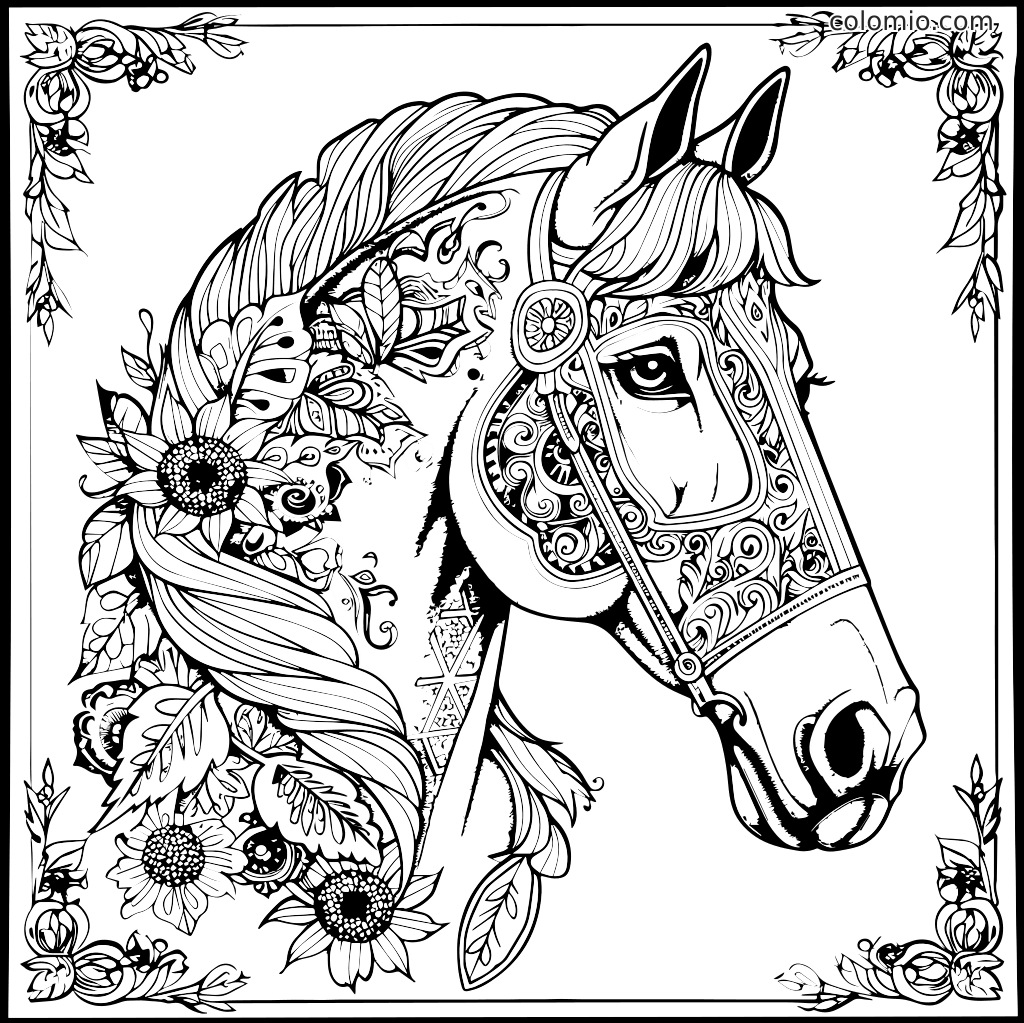
Horse head with harness – colored in by the community
-
3 Likes
-
1 Likes
-
1 Likes


Horse at the drinking trough – colored in by the community
-
1 Likes

Funny horses – colored in by the community
-
by user-6aha42
1 Likes
-
0 Likes
-
0 Likes


Grazing horse – colored in by the community
-
3 Likes
-
by user-6aha42
2 Likes
-
by user-6aha42
2 Likes

Trotting foal – colored in by the community
-
7 Likes
-
3 Likes
-
by user-6aha42
2 Likes

Strong horse – colored in by the community
-
3 Likes
-
0 Likes
-
0 Likes


Pinto horse with birds – colored in by the community
-
1 Likes
-
by user-6aha42
0 Likes

Pinto horse in the forest – colored in by the community
-
2 Likes


Why Kids Love These Horse Coloring Pages
- Coloring horses helps children develop fine motor control and pencil grip as they stay inside lines and choose colors.
- Teachers and parents can print pages quickly for lesson extensions, quiet time, or themed units without extra prep.
- Working on a horse picture encourages color recognition and pattern practice through simple, repeatable shapes.
- These printable pages provide a calm, screen-free activity that promotes focus and imaginative play with minimal materials.
Creative Ideas & Activities
- Make a storybook: have kids color several horse pages, staple them together, and write a short sentence under each picture to create their own illustrated story.
- Create paper plate horses by cutting a colored mane from construction paper and gluing it to a colored horse head for a quick craft.
- Turn coloring into a learning game by assigning number or letter keys to colors and asking children to follow a “code” to color parts of the horse.
- Use colored pencils and watercolor wash: kids color the horse lines then lightly paint a background wash for a mixed-media effect suitable for display.
- Make a classroom mural by joining several horse pages into a large pasture scene and having each child decorate one horse with unique patterns.
- Build simple stick puppets by coloring a horse, cutting it out, and attaching it to a popsicle stick for storytelling and puppet shows.
- Practice counting and sorting by having children color groups of horses in different colors and then count or sort them into piles.
- Design a “decorate your pony” contest where kids add accessories with craft supplies like yarn manes, sticker saddles, and cotton-ball tails.
Frequently Asked Questions
Are these horse coloring pages free to download and print?
Yes, all coloring pages on this page are free to download and print, and you can use them at home or in school. Classroom use is allowed, so teachers and kindergarten staff can print copies for students without charge.
What file formats are the coloring pages available in for printing?
Coloring pages are available in common formats like PDF and JPG so you can choose the file that works best for your printer. PDFs usually keep the best quality for printing, while JPGs are easy to view and print from most devices.
What ages are these horse coloring pages suitable for?
Pages range from simple outlines for toddlers and preschoolers to more detailed designs for older children, making them suitable for ages 2–10. Teachers can select simpler horses for kindergarten and more intricate horses for elementary art activities.
Can I use the horse coloring pages in my classroom or kindergarten?
Yes, the pages can be used for free in classrooms and kindergarten settings and are perfect for group activities, centers, or take-home work. You may print as many copies as you need for your students.
How do I get the best coloring results with these horse pages?
For crayons and colored pencils use standard printer paper or slightly heavier paper (around 80–100 gsm) to reduce tearing; for markers choose a heavier or coated paper to prevent bleed-through. Place a scrap sheet under the page when using markers, try blending with colored pencils for softer effects, and consider laminating finished horses for reuse or display.