
A giraffe coloring page is a simple, joyful way for children to meet one of the savannah’s most charming animals while practicing early art skills. These printable sheets feature adorable giraffe illustrations that range from bold, chunky outlines for little hands to more detailed patterns for older kids, so every child can enjoy coloring at their own level. Whether a child is fascinated by long necks, spots, or the gentle nature of giraffes, a single coloring page invites them to explore color, shape, and imagination in a calm, hands-on activity.
These giraffe coloring pages are perfect for toddlers, preschoolers, and older kids—each design supports different stages of development. Use them at home during quiet time, in the classroom for a nature-themed lesson, in a homeschool curriculum to reinforce counting and pattern recognition, or tucked into a travel folder to keep kids happily occupied on the go. Beyond pure fun, coloring builds fine motor control, hand-eye coordination, color recognition, focus, and early literacy when children name colors or tell stories about the giraffes they’ve colored. Warm, welcoming, and easy to adapt, these pages turn a simple art task into a creative, educational moment the whole family can enjoy.


Cute kawaii giraffe portrait – colored in by the community
-
6 Likes

-
by Katze
6 Likes

-
by Ania
6 Likes


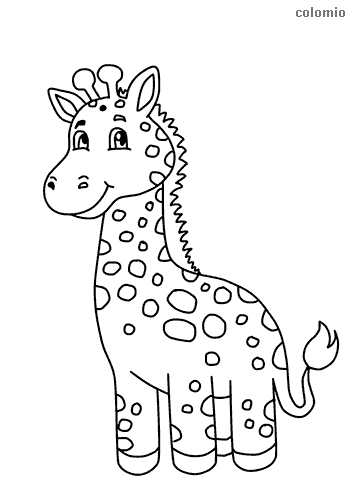
Cute kawaii giraffe walking – colored in by the community
-
1 Likes


Giraffes in a grassy landscape – colored in by the community
-
5 Likes
-
0 Likes
-
0 Likes


Simple giraffe in a zoo enclosure – colored in by the community
-
4 Likes


Spot-by-Spot Magic: Make Your Giraffe Look Real!
A giraffe is easy to recognize because of its tall neck, gentle face, and beautiful patchy coat. While coloring, slow down at the special parts that make a giraffe look like a real animal, not just a tall horse.
What to Notice While Coloring Your Giraffe
- Patch pattern: Giraffes have many patches with lighter lines between them. Try to keep the patch edges neat so the pattern stands out.
- Neck and legs: These long shapes look best when colored smoothly from top to bottom, without lots of scribbly stops.
- Mane: Many giraffes have a short mane along the top of the neck. Coloring it a little darker helps it show up.
- Ossicones (horn-like bumps): These small bumps on the head are a giraffe’s special feature. Make them match the face color, and add a slightly darker tip if shown.
- Eyes and nose: Keep these areas clean and simple. A tiny white spot left in the eye can make it look shiny.
- Hooves and tail tuft: These parts are usually darker than the legs, so they are great places for a deeper brown.
Helpful hint: Color the light base (the giraffe’s main coat) first, then add the darker patches on top. This makes the pattern look clear and tidy.
Realistic Giraffe Colors (With Easy Color Hints)
| Giraffe Part | Realistic Color | Color Swatch |
|---|---|---|
| Main coat (base fur) | Warm Sand / Light Tan | |
| Patches (spots) | Chestnut Brown | |
| Patch edges (thin lines between patches) | Cream | |
| Mane (short hair on neck) | Dark Brown | |
| Face (often a bit lighter) | Light Beige | |
| Ossicones (horn-like bumps) | Tan Brown | |
| Tail tuft | Deep Brown | |
| Hooves | Very Dark Brown | |
| Eyes | Black | |
| Nostrils | Charcoal Gray |
Neat Coloring Tricks for a Real-Looking Giraffe
- Use gentle, even strokes on the neck and legs to keep them looking smooth and tall.
- Make the patches slightly darker than the base coat so the pattern is easy to see.
- Leave the thin lines between patches lighter to help each spot “pop.”
- Press a little harder for mane, hooves, and tail tuft to show their darker color clearly.


Mother giraffe with her calf – colored in by the community
-
by Matilde
8 Likes


Snip, Stick, and Smile: Giraffe Crafts to Try!
Make a Pop-Up Giraffe Neck
✂️ You need: colored giraffe page, cardstock, scissors, glue stick, crayons or markers
- Color the giraffe and cut it out.
- Fold a strip of cardstock like an accordion.
- Glue one end behind the head and the other to the body.
💡 Supports: fine motor skills, creativity, spatial thinking
Toilet Roll Giraffe Buddy
✂️ You need: toilet paper roll, yellow or brown paper, glue, scissors, marker, small scraps of paper
- Wrap the roll with paper and glue it down.
- Cut and glue on a head, ears, and two small horns.
- Draw spots and a smile, then add a paper tail.
💡 Supports: scissor practice, imagination, hand-eye coordination
Classroom Giraffe Spot Mural
✂️ You need: large paper (or taped sheets), brown and yellow paper scraps, glue sticks, crayons or markers
- Draw one big giraffe outline on the large paper.
- Tear or cut paper scraps into spot shapes.
- Let everyone glue spots on and color the background.
💡 Supports: teamwork, creativity, planning and sharing space

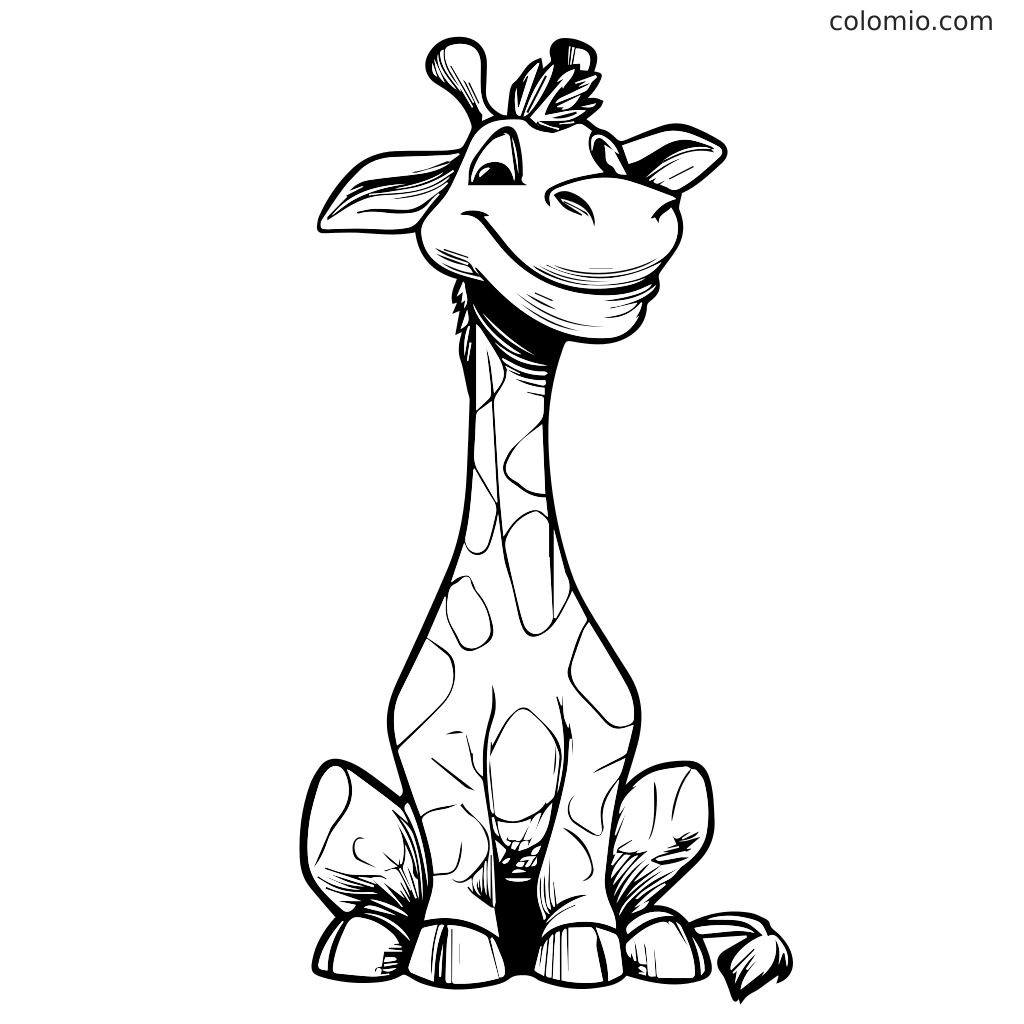
Smiling cartoon giraffe – colored in by the community
-
by luca
6 Likes
-
2 Likes

Giraffe with leaves – colored in by the community
-
2 Likes
-
1 Likes
-
0 Likes
Did You Know? 5 Tall-Tale Facts About Giraffes
A Neck With Only Seven Bones!
Giraffes have the same number of neck bones as people—seven—but each bone is super long, making their necks look like a giant tower. San Diego Zoo
Their Spots Are Like Fingerprints
No two giraffes have the exact same spot pattern, so their coats can help scientists tell them apart—kind of like a natural name tag. National Geographic
A Tongue Longer Than a Ruler
A giraffe’s tongue can be about 18–20 inches long, helping it grab leaves from thorny trees like acacia—snack time from way up high! Smithsonian Magazine
Sleepy… but Only Tiny Naps
Giraffes don’t sleep for long stretches; they often rest in short naps, sometimes just a few minutes at a time, so they can stay alert. National Geographic Kids
Giraffes Visit U.S. Zoos Too
Even though giraffes live in Africa, families in many U.S. states can see them at accredited zoos, where keepers help them stay healthy and teach visitors about conservation. Smithsonian Magazine


Why Kids Love These Giraffe Coloring Pages
- Giraffe coloring pages help children build fine motor skills and hand-eye coordination by coloring spots, outlines, and long neck details.
- Parents and teachers can use these printable giraffes for quick art activities, themed lessons, or quiet transition times with no extra prep.
- These pages provide a tactile, screen-free activity that encourages focus, imagination, and independent play.
- Coloring giraffes supports early learning of colors, patterns, and counting by asking children to color spots or count body parts.
Creative Ideas & Activities
- Turn a giraffe page into a mask by printing on cardstock, cutting out eye holes, adding glue-on horns, and attaching elastic or string for dress-up play.
- Make a matching memory game by coloring pairs of giraffes in different patterns, cutting them out, and playing face-down memory to boost concentration.
- Use the giraffe spots as a counting worksheet: ask children to color a set number of spots, then write or say the total to practice early math.
- Create a collaborative classroom mural where each child decorates a giraffe and all the giraffes are displayed as a savanna scene for group storytelling.
- Do a texture collage by gluing tissue paper, yarn, sand, or fabric onto the giraffe’s spots to explore sensory materials and mixed media art.
- Use a giraffe outline as a story prompt: have kids invent a short tale about where their giraffe lives, what it eats, and a day in its life to develop language skills.
- Attach colored giraffe cutouts to Popsicle sticks to make puppets for role-play, cooperative plays, or practicing social skills and dialogue.
- Teach basic art techniques like shading or color blending by using crayons, colored pencils, or watered-down paint on a giraffe outline to practice control and layering.
Frequently Asked Questions
Are these giraffe coloring pages free to download and print?
All coloring pages on this page are free to download and print. You can save and print as many giraffes as you need for home or school activities.
Can I print the pages from both PDF and JPG file formats?
Yes, the pages are available in common formats like PDF and JPG for easy printing. Choose PDF for consistent layout across devices and JPG if you need to edit or insert images into other documents before printing.
What ages are these giraffe coloring pages suitable for?
These giraffe pages are suitable for a wide age range, from toddlers who enjoy simple coloring to early elementary children who like more detailed designs. Younger kids benefit from bold outlines and crayons, while older children can experiment with finer details and shading.
Can I use the giraffe coloring pages in my classroom or kindergarten?
They can be used for free at school and in kindergarten (classroom use is allowed). Teachers are welcome to print and distribute the giraffe pages for lessons, centers, and art projects.
How can I get the best coloring results with crayons, markers, or paint?
For crayons and colored pencils, use standard 20–24 lb printer paper or slightly heavier paper for less bleed-through; for markers or paint, choose cardstock or mixed-media paper to prevent warping. Provide a variety of tools—crayons for blending, markers for bold color, and watercolor or tempera for paint techniques—and place a scrap sheet under the page when using markers or wet media.